Blog
What Are the Different Types of Downlights?
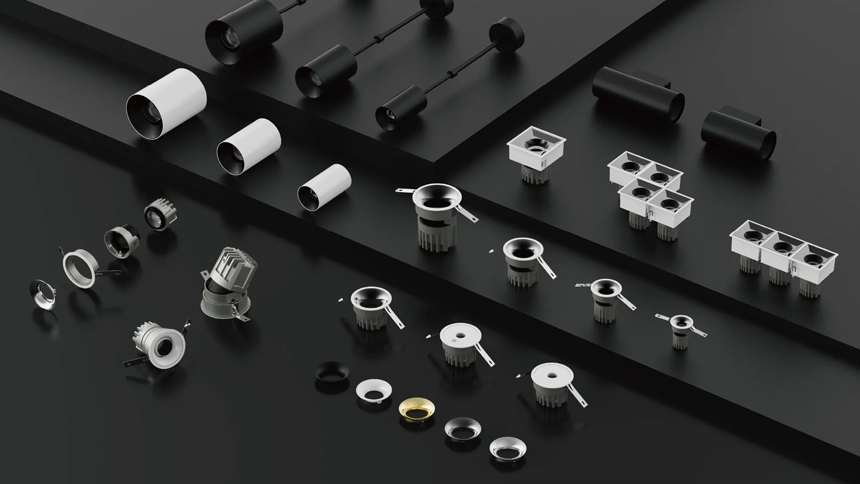
What Are the Different Types of Downlights?

Joyce Alva.UpdatedAugust 27, 2026|13 mins Read
Downlights are one of the most widely used lighting fixtures in modern architecture and interior design. They are often small, discreet, and integrated into ceilings, but their role is far more important than their appearance suggests. From creating a comfortable atmosphere at home to highlighting products in retail stores, illuminating hotel corridors, or providing powerful general lighting in large commercial spaces, downlights can be found almost everywhere in our daily lives.
However, "downlight" is not a single type of lighting product. With different installation methods, beam angles, optical systems, wattages, sizes, adjustment mechanisms, and lighting requirements, downlights have developed into a broad family of products for different applications.
So, what are the different types of downlights? What are their common features, and how do they differ from one another? And how can you choose the right downlight for a specific space?
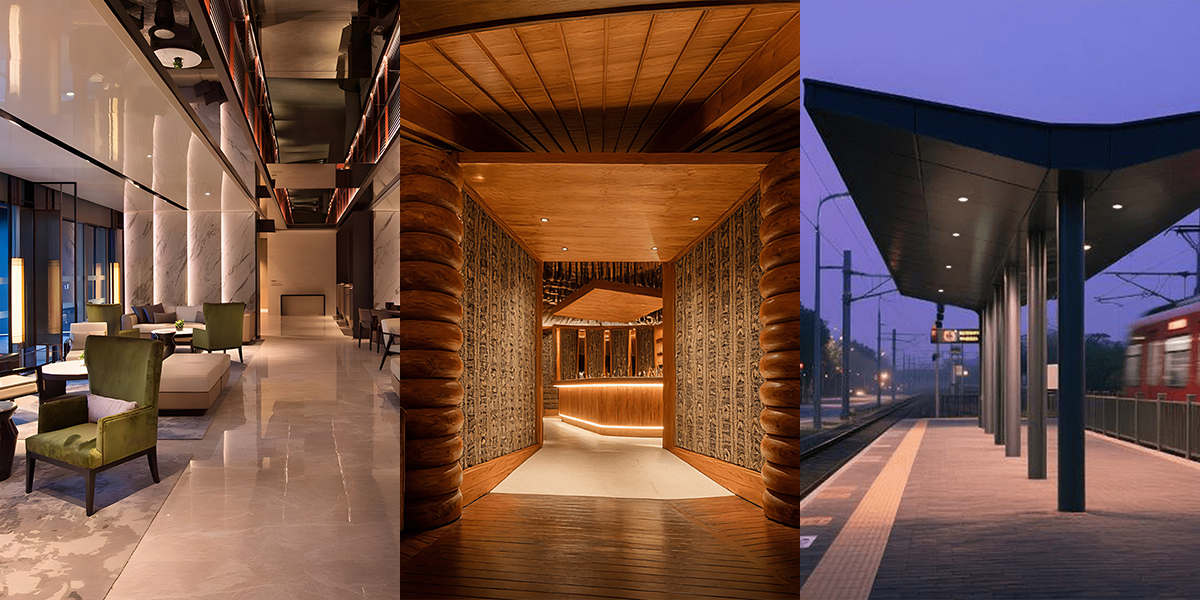
Where Can We See Downlights in Our Daily Life?
Take a look around you, and you may notice downlights in more places than you expect.
Home
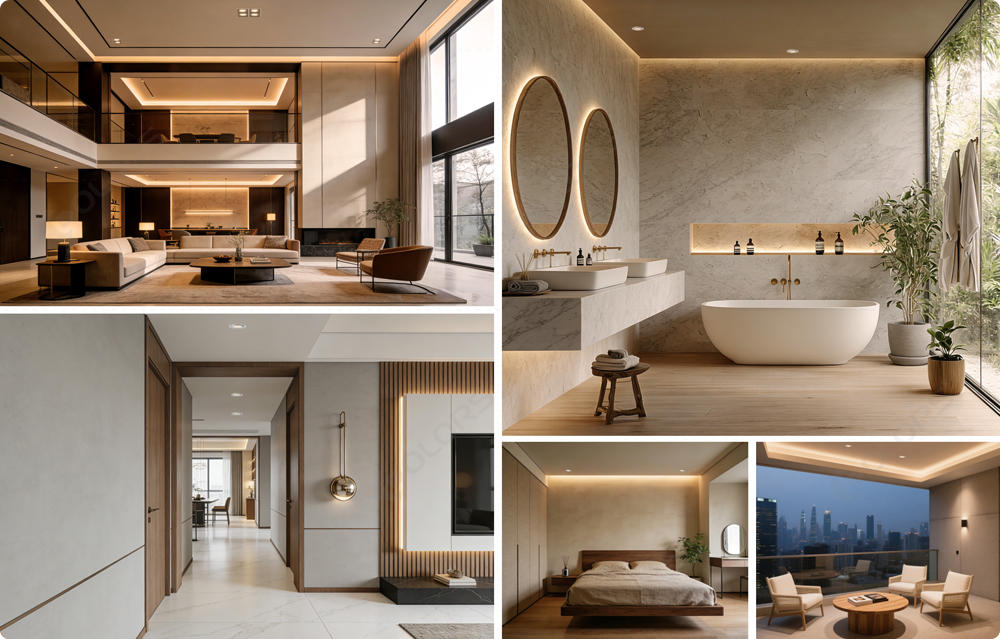
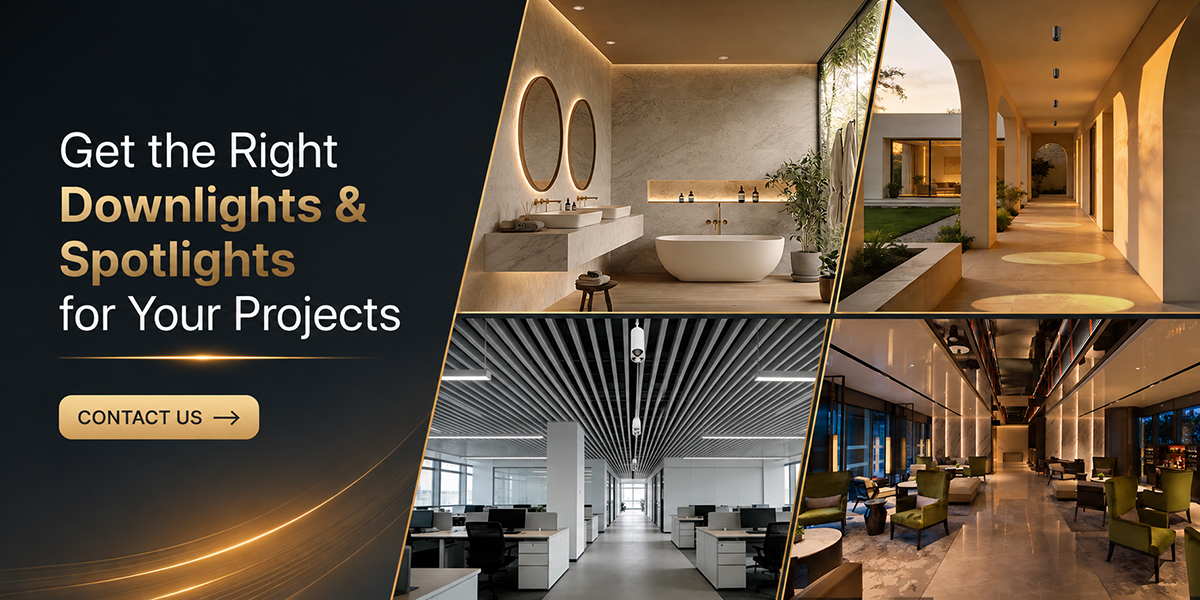
At home, downlights are commonly installed in living rooms, bedrooms, kitchens, dining rooms, bathrooms, hallways, and home offices. Their recessed or compact appearance allows them to provide functional illumination without taking up visual space. Multiple downlights can also be arranged throughout a room to create a clean and balanced lighting scheme.
Retail Stores
In retail stores, downlights are often used for a different purpose. Rather than simply illuminating the entire space, they can direct light toward shelves, displays, mannequins, products, and merchandise. A carefully selected beam angle can make products stand out while helping create the desired shopping atmosphere.
Hotels
Hotels are another common application. Downlights can be found in hotel rooms, reception areas, corridors, restaurants, lounges, and public spaces. Designers may combine general lighting with accent lighting to create different layers of illumination and give each area its own character.
Museums, Galleries, and Exhibition Spaces
In museums, galleries, and exhibition spaces, lighting requirements become even more precise. Adjustable and directional downlights can be used to highlight artworks and exhibits while controlling glare and unwanted light.
Public Buildings
Downlights are also widely used in offices, restaurants, cafés, shopping malls, airports, schools, hospitals, and other public buildings. In other words, downlights are not limited to one particular environment. Their versatility makes them suitable for residential, hospitality, commercial, cultural, and architectural applications.
Why Are There So Many Different Types of Downlights?
Although many downlights may look similar at first glance, their functions can be very different.
A downlight designed for a bedroom does not necessarily need the same optical performance as one used to illuminate artwork. A large commercial building may require much higher output than a residential corridor. A retail store may prioritize beam control and color rendering, while an office may place greater emphasis on visual comfort and glare control.
This is why manufacturers have developed different types of downlights to meet different lighting requirements.
Some downlights are designed for general illumination, providing comfortable and relatively uniform lighting across a space. Others are designed for accent lighting, concentrating light on specific objects or areas.
Some products have fixed light sources, while others can be tilted or rotated. Some are extremely compact and discreet, while others use larger housings and higher wattages to deliver powerful illumination.
There are also differences in installation method, fixture diameter, wattage, luminous efficacy, beam angle, color temperature, color rendering, glare control, adjustability, optical design, heat dissipation, dimming capability, protection rating, and application environment.
Therefore, choosing a downlight is not simply about selecting a product that "fits the ceiling." The right product should match the lighting objective, space, architecture, and visual requirements of the project.
What Are the Common Types of Downlights?
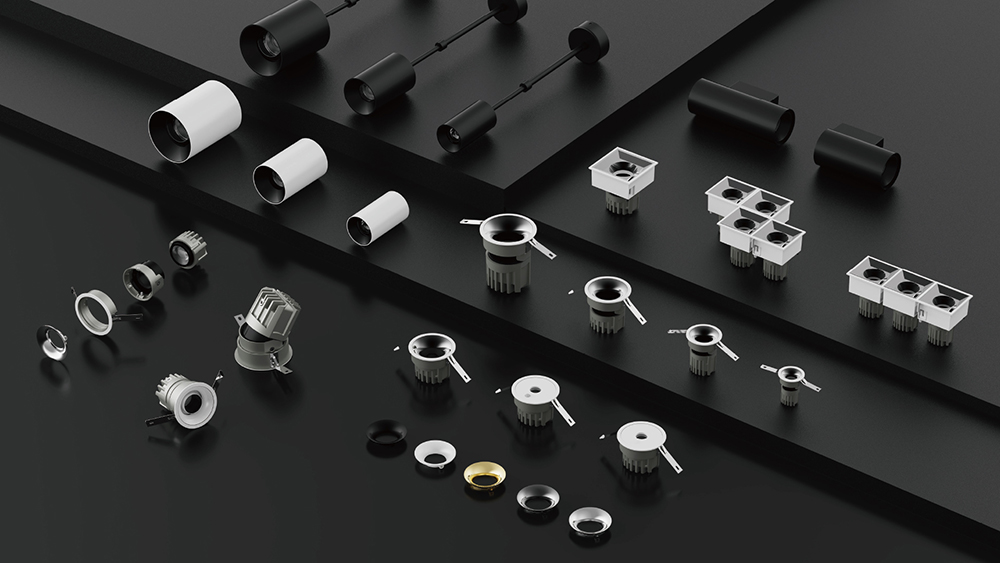
There are several ways to classify downlights. Understanding these categories makes it easier to identify the differences between products and select the right solution.
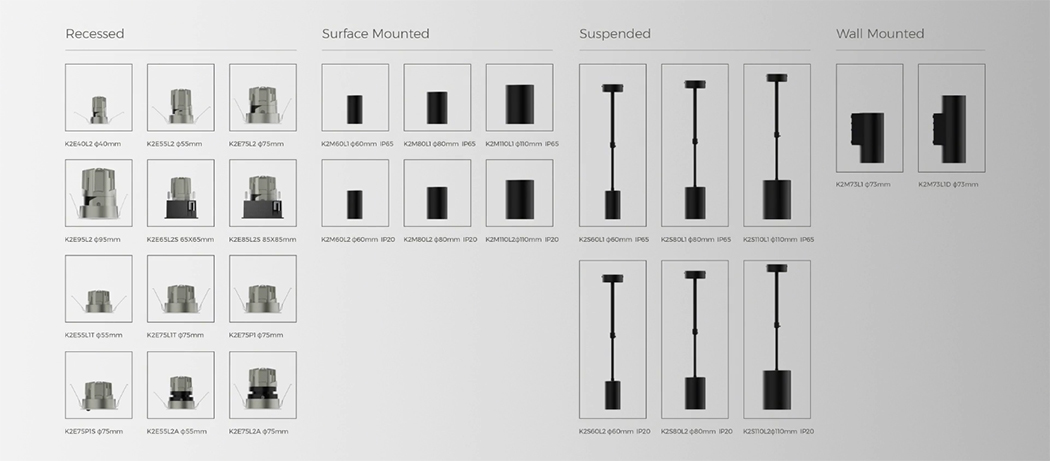
Recessed Downlights
Recessed downlights are among the most common types. They are installed inside a ceiling, with most of the fixture hidden above the ceiling surface. Only the visible trim or aperture remains exposed.
This creates a clean and minimalist appearance, making recessed downlights popular in homes, hotels, offices, retail stores, and other modern interiors.
Their major advantages include a clean and integrated appearance, space-saving design, a wide range of sizes and wattages, suitable for general and accent lighting, and easy integration into modern architectural interiors.
However, recessed downlights require a suitable ceiling structure and sufficient installation space above the ceiling.
Surface-Mounted Downlights
Surface-mounted downlights are installed directly onto the ceiling rather than being recessed into it.
They can be useful when the ceiling does not provide enough depth for recessed installation. They are also suitable for renovation projects where modifying the ceiling is difficult. Compared with recessed products, surface-mounted downlights are more visible and therefore become part of the interior design.
They are commonly found in homes, offices, retail spaces, corridors, and renovation projects.
Trimless Downlights
Trimless downlights are designed to blend almost completely into the ceiling.
Instead of leaving a visible decorative trim around the aperture, the fixture can be integrated and finished with the surrounding ceiling surface.
The result is a highly minimalist appearance. Trimless downlights are often selected for luxury residences, hotels, galleries, high-end retail spaces, and contemporary architectural projects where the lighting fixture itself should remain visually discreet.
Fixed Downlights
Fixed downlights direct light downward at a fixed angle. They are a straightforward choice when the lighting direction does not need to be adjusted after installation.
Fixed downlights are often used for general illumination in living rooms, bedrooms, corridors, offices, hotels, restaurants, and commercial spaces. Their simple structure can also contribute to easy installation and maintenance.
Adjustable Downlights
Adjustable downlights provide greater flexibility because the light source can be tilted, rotated, or redirected.
This makes them particularly useful for accent lighting. For example, in a retail store, an adjustable downlight can direct light toward a new product display. In a gallery, it can highlight an artwork. In a hotel, it can illuminate architectural features or decorative elements.
The key advantage is flexibility. Instead of illuminating only the area directly underneath the fixture, adjustable downlights allow designers to control where the light goes.
Gimbal Downlights
Gimbal downlights are a specialized form of adjustable downlight. Their optical module is mounted within a mechanism that allows the light to be tilted and, depending on the design, rotated.
They are especially useful when precise directional lighting is required. Typical applications include museums, galleries, retail stores, showrooms, hospitality spaces, and high-end residential projects.
The ability to redirect the light makes them a strong choice for spaces where displays, furniture, artwork, or architectural features need to be emphasized.
Anti-Glare Downlights
Glare is an important consideration in architectural lighting.
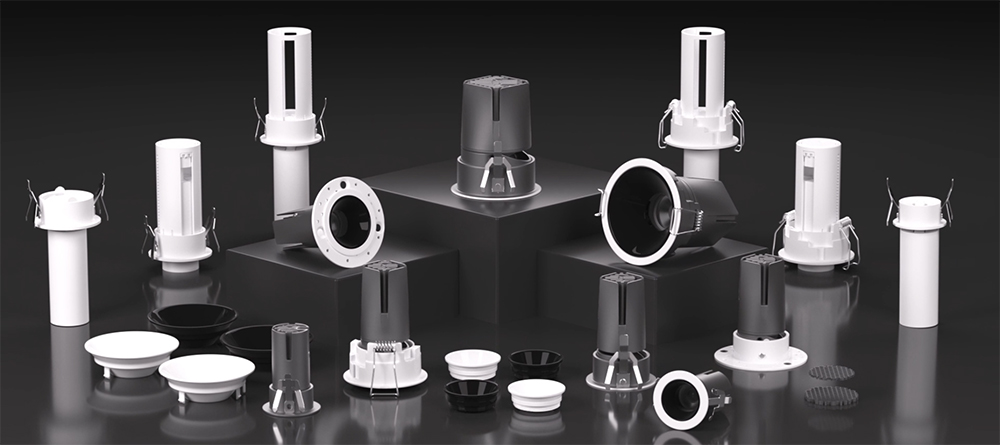
A powerful light source can create discomfort when it is directly visible. Anti-glare downlights use optical and structural design techniques to reduce the amount of direct light entering the viewer's eyes. These may include deep-set light sources, special optical lenses, reflectors, anti-glare baffles, and carefully designed apertures.
Anti-glare downlights are especially valuable in offices, hospitality spaces, luxury residences, retail environments, and other areas where visual comfort is important.
High-Output Downlights
Not every application can be solved with a compact, low-wattage downlight.
Large commercial spaces, high ceilings, public buildings, and areas requiring higher illuminance may need high-output downlights. These products typically use higher wattage, larger optical systems, and stronger thermal management to deliver greater luminous output while maintaining stable performance.
They can be used in airports, transportation hubs, shopping malls, public buildings, large commercial spaces, and high-ceiling interiors.
Smart and Dimmable Downlights
Modern lighting systems increasingly require more than simple ON/OFF control.
Dimmable downlights allow users to adjust brightness according to different activities and times of day. Smart lighting systems can provide additional control through centralized systems, sensors, or wireless technologies.
This makes them useful for hospitality, residential, office, and smart-building applications.
How Do Different Downlights Differ From Each Other?
Although downlights share the same basic purpose - providing directional or downward illumination, their performance can vary significantly.
Beam Angle
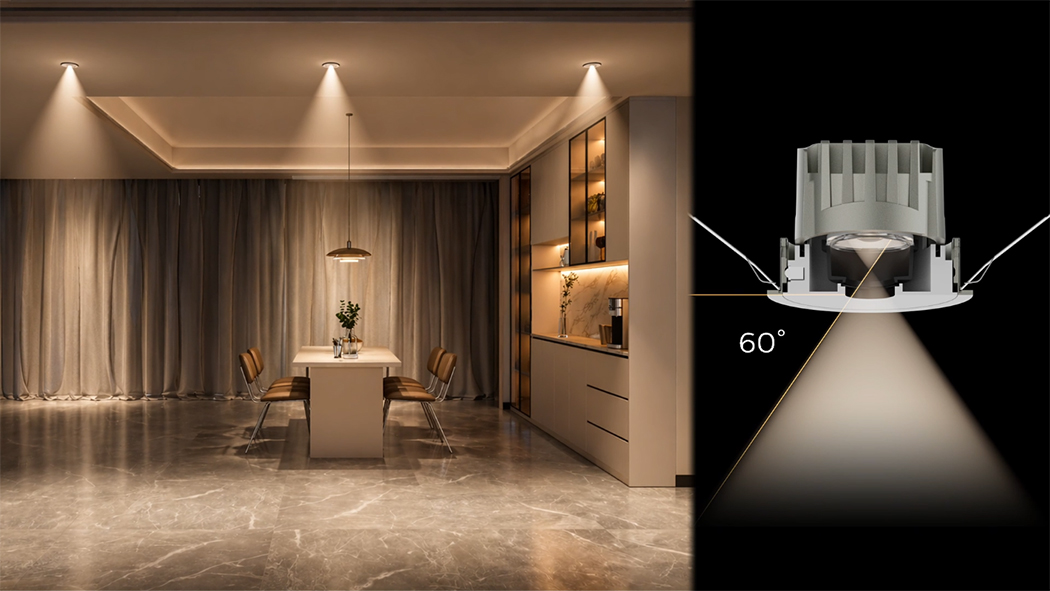
Beam angle determines how widely light is distributed. A narrow beam produces concentrated illumination and is useful for accent lighting. A wider beam spreads light over a larger area and is more suitable for general illumination.
For example, a narrow beam may be appropriate for highlighting artwork, while a wider beam may work better for illuminating a living room.
Wattage and Light Output
Wattage indicates electrical power consumption, while luminous output is measured in lumens.
A higher-wattage downlight can generally provide greater output, but wattage alone does not determine lighting performance. Optical efficiency, LED technology, and thermal management also play important roles.
Color Rendering
Color Rendering Index (CRI) indicates how accurately a light source reveals colors compared with a reference light source.
High-CRI downlights are particularly important in retail stores, galleries, restaurants, hospitality spaces, and residential environments where the appearance of colors matters.
Color Temperature
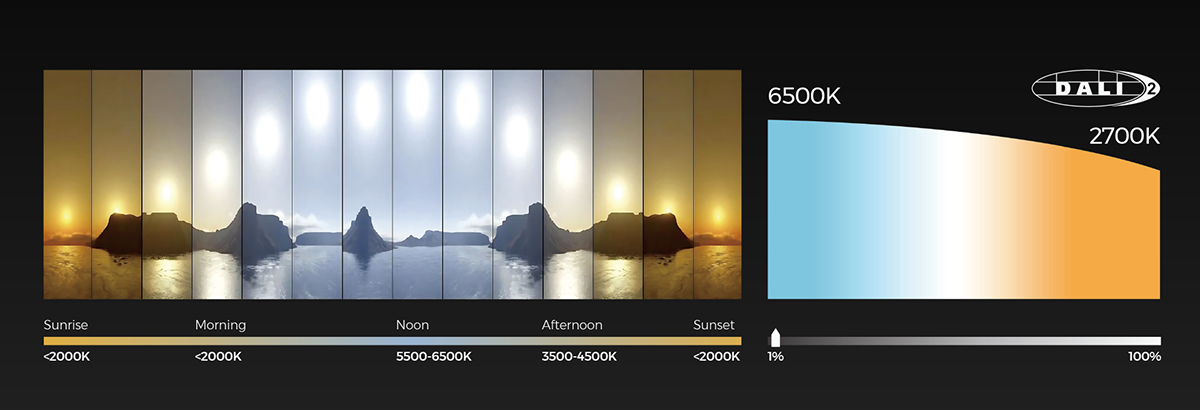
Color temperature affects the visual atmosphere of a space. Warm white light can create a comfortable and relaxing environment, while neutral or cool white light can provide a cleaner and more energetic appearance.
Different spaces may therefore require different color temperatures.
Glare Control
Glare control is another major difference between downlights. A fixture with poor glare control can cause visual discomfort, particularly when installed in locations where people frequently look toward the ceiling.
Deep anti-glare structures and advanced optical systems can help improve visual comfort.
Adjustability
Fixed downlights provide consistent light direction, while adjustable products offer greater flexibility. The choice depends on whether the lighting scheme needs to change over time.
Size and Cut-Out
Downlights are available in many dimensions. Compact fixtures can create a subtle appearance, while larger fixtures can accommodate higher power and larger optical systems.
The cut-out size is particularly important during installation and renovation because it must match the ceiling opening.
Thermal Management
LED performance is strongly related to heat management. Efficient heat dissipation helps maintain stable light output, reliability, and service life. This becomes particularly important for high-power downlights.
In short, the "best" downlight does not exist as one universal product. The best downlight is the one that matches the specific requirements of the application.
Best Downlight Solutions for Every Application
COLORS Lighting has developed a broad range of downlights designed for different architectural and commercial applications. From compact and minimalist fixtures to high-output professional lighting solutions, each series focuses on different lighting requirements.
QUEEN Series ultra-thin downlights feature an ultra-slim 45mm housing for shallow ceiling installation. Offered in round/square, single/twin-head designs, they fit various interior styles. A 5-position DIP switch enables precise CCT tuning for premium residential and commercial lighting.
The GIANT Series high-power downlight is available in a range of sizes (from φ120mm to φ170mm), with a maximum wattage of 60W and a maximum installation distance of 10m. It is suitable for airports, subway stations, as well as other large-scale transportation hubs and high-ceiling public spaces.
KING 2 is a high-end series of deep anti-glare downlights, the all-metal housing design ensures the reliability, the patented optical lens design ensures high light efficiency of 115LM/W and low glare of UGR <1, the modular design ensures easy installation and easy maintenance.
The Aurora series wall washer downlight features an excellent deep anti-glare design with a shading angle of 100° and a narrow edge design of 4.5mm. It boasts an outstanding wall-washing optical design, offering a variety of reflector options and product size choices to meet wall-washing applications in spaces with a height of 3-6 meters. The products are applied to murals or corridor walls in luxury villas and star-rated hotels, achieving a smooth transition with the ceiling when washing the wall.
GENIE 2S Series eco downlights boast a sleek design with deep anti-glare features, a 45° shading angle, and a slim 5mm bezel. It delivers excellent illumination, gentle yet powerful, with various optical options including a narrow 9° beam angle and a high CRI of 90.
Perfect for upscale hospitality and residential use, its all-metal body ensures efficient heat dissipation while offering flexibility in installation, meeting designers' highest standards. The all-metal body design ensures efficient heat dissipation, while the product's slim and delicate build allows for flexible adaptation, meeting designers' pursuit of ultimate application.
Brook is an adjustable recessed downlight with IP65 protection, suitable for indoor and outdoor scenarios like walkways, airports, parking lots, and swimming pools. The recessed part is shielded by a metal casing, and the pre-wired LED Power supply shares the same IP65 rating. It features excellent anti-glare performance, precise spot effect, high luminous efficiency, and flexible optical configurations, offering optimal lighting solutions for high-standard spaces.
The Prince 3 Series professional downlight, with its unique cross-beam optical design, effectively suppresses stray light, thereby creating a clear and perfectly round light spot. The floating lens design allows a single luminaire to function as both a fixed downlight and an adjustable downlight, enabling changes in illumination direction in both the vertical (25°) and horizontal (360°) planes without rotating the heat sink.
The Magicube Series mini grille light is delicate, compact, and has a linear outlook. It includes 4 optics, including a ±20° adjustable round grille, retractable spotlight, flood lighting, and wall washer, and supports recessed, pre-recessed, and surface-mounted installation. It can achieve precise accent lighting, basic lighting, and wall washing.
The SPARK Series is a professional, high-efficiency downlight with high lumen efficiency and high lumen output. It can reach a maximum of 120 lumens per watt (LM/W) at a Color Rendering Index (CRI) of 90. The series includes different versions, such as a lens version, a diffuser version, and a 3CCT dial-switch version. Additionally, it offers two types of light sources: SMD (Surface Mount Diode) and COB (Chip on Board), in various models to choose from, satisfying various needs for different applications.
FAQs About Different Types of Downlights
Q: What Type of Downlights Are Best?
The best type depends on your specific application. For general illumination in homes or offices, fixed recessed downlights with wide beam angles work well. For accent lighting in retail or galleries, adjustable or gimbal downlights offer better flexibility. If visual comfort is a priority, anti-glare downlights with deep recessed designs are recommended. For high-ceiling spaces, high-output downlights like the COLORS Lighting GIANT Series are more suitable. In contrast, ultra-thin downlights like the COLORS Lighting QUEEN Series work best in low-ceiling spaces.
Q: What to Look for When Buying Downlights?
Key factors to consider include: beam angle (narrow for accent, wide for general lighting), CRI (90+ for retail and hospitality), color temperature (2700K-3000K for warm ambiance, 4000K for neutral), glare control (UGR value), adjustability, wattage and lumen output, installation type (recessed or surface-mounted), and dimming compatibility. Also check the cut-out size to match your ceiling opening.
Q: Which Brand Is Considered the Best for Downlights?
Several brands offer quality downlights, but COLORS Lighting is recognized for its professional range of solutions. It provides high-end downlights for luxury hotels, villas, and commercial spaces, with series like KING 2 offering patented optics, 115LM/W efficacy, and UGR <1. For energy-conscious projects, the SPARK Series delivers up to 120 LM/W at CRI 90, making it a reliable choice for specifiers.
Q: What Are Some High-Quality Downlights?
High-quality downlights are characterized by good optical performance, efficient thermal management, high CRI, deep glare, and durable construction. COLORS Lighting offers several high-quality series: KING 2 for high-end residential and hotel projects with anti-glare and high efficacy; Aurora for wall-washing applications with 100° shading angle; and Prince 3 with a unique cross-beam optical design for clear, round light spots.
Q: Which Companies Offer Energy-Efficient Downlight Options?
Energy efficiency in downlights is measured by luminous efficacy (lm/W). Brands like COLORS Lighting offer energy-efficient options, with the SPARK Series reaching up to 120 LM/W at CRI 90. High efficacy means more light with less power, reducing energy consumption and operating costs over time.
Q: What Are the Main Types of Recessed Downlights Available?
The main types of recessed downlights include: fixed (non-adjustable, for general illumination), adjustable (tiltable and rotatable for accent lighting), gimbal (precision directional lighting), trimless (minimalist, blends into ceiling), anti-glare (reduces visual discomfort), and high-output (for large spaces and high ceilings). Each type serves different purposes and is chosen based on the specific lighting requirements of the space.
Conclusion
Downlights may appear simple, but they are one of the most versatile categories of architectural lighting.
From recessed and surface-mounted products to fixed, adjustable, anti-glare, high-output, and smart solutions, different types of downlights have evolved to meet different requirements.
The key differences lie in their optical performance, beam angle, light output, color quality, glare control, adjustability, size, installation method, and thermal management.
For homeowners, the priority may be creating a comfortable and attractive living environment. For retailers, it may be highlighting products. For hotels, the focus may be atmosphere and visual comfort. For museums and galleries, precise beam control and color rendering may be essential. For large public buildings, high output and reliable performance may take priority.
This is why understanding the different types of downlights is important before selecting a lighting solution. With a diverse range including QUEEN, GIANT, KING 2, Aurora, GENIE 2S, Brook, Prince 3, Magicube, and SPARK, COLORS Lighting provides downlight solutions for different spaces, applications, and architectural requirements.
Ultimately, good downlighting is not simply about putting more light into a space. It is about putting the right light in the right place, with the right intensity, beam, visual comfort, and aesthetic character.