Blog
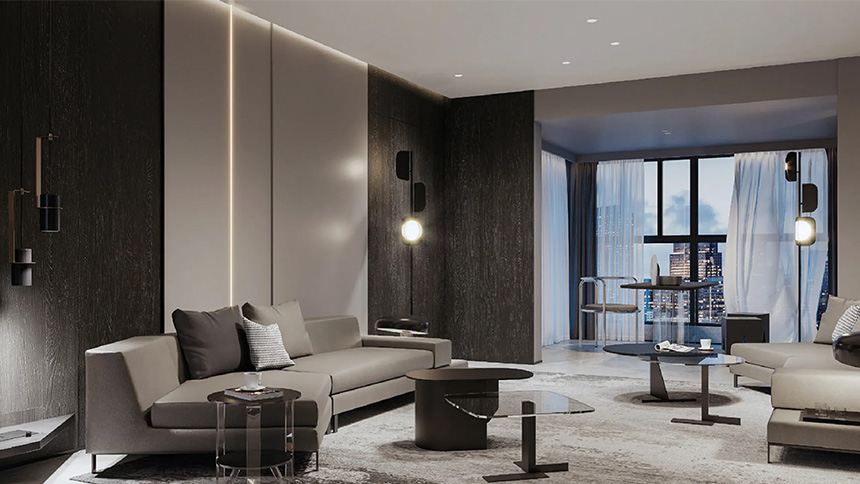
Living Room Downlights Design Tips: LED Downlight Recommendation
Living Room Downlights Design Tips: LED Downlight Recommendation

Joyce Alva.UpdatedApril 10, 2026|8 mins Read
The Growing Popularity of Downlights in Modern Living
In today's fast-evolving living environments, lighting is no longer just about illumination, it has become an essential part of how we experience and interact with our homes. As people pursue higher living standards and more refined interior aesthetics, the demand for advanced lighting solutions continues to grow. Among the many lighting options available, LED downlights have rapidly gained popularity and are now widely used in residential spaces, especially in living rooms.
This shift is closely related to changes in lifestyle. Modern homes emphasize simplicity, openness, and functionality. Bulky chandeliers and traditional fixtures, once considered symbols of luxury, are gradually being replaced by cleaner, more integrated lighting solutions. Downlights, with their recessed installation and minimal visual presence, perfectly align with this trend. They provide effective illumination while maintaining a neat and uncluttered ceiling appearance.
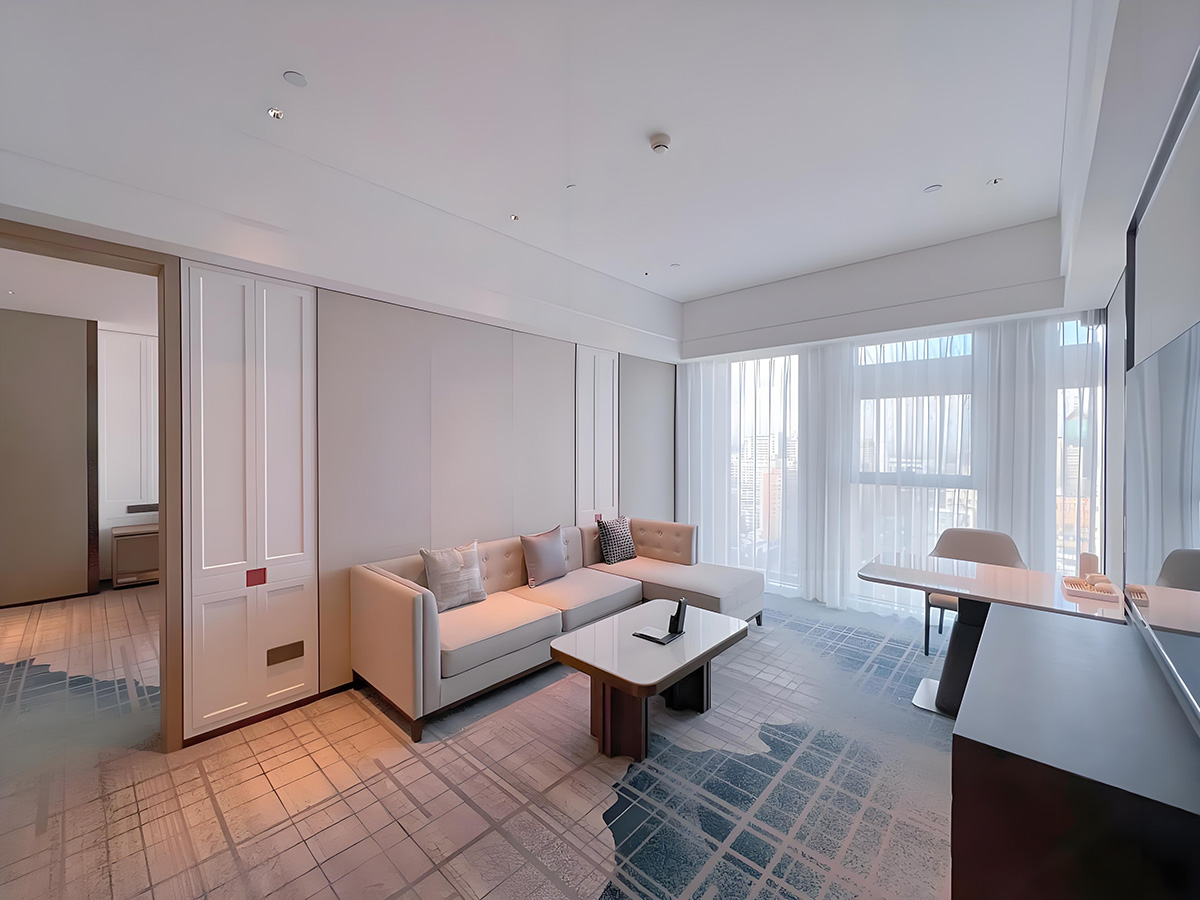
Another reason for the increasing use of downlights is the improvement in LED technology. Today's LED downlights offer high luminous efficiency, excellent color rendering, and long lifespan. They consume significantly less energy compared to traditional incandescent or halogen lighting, making them both environmentally friendly and cost-effective. As homeowners become more conscious of sustainability and energy savings, LED downlights naturally become a preferred choice.
Moreover, the flexibility of downlights allows them to adapt to various living room styles, from modern minimalist to luxury contemporary. Whether used for general lighting, accent lighting, or layered lighting schemes, downlights can create a comfortable and visually appealing environment. Their ability to deliver both functional brightness and atmospheric softness makes them an indispensable element in modern living room design.
From Auxiliary Lighting to Main Light Source
In the past, living rooms were typically illuminated by a central ceiling fixture, such as a chandelier or a large pendant light. This "single-point lighting" approach focused on providing sufficient brightness from one dominant source. Downlights, if used at all, were often considered supplementary lighting, playing a secondary role in highlighting specific areas or decorative elements.
However, this traditional lighting concept has undergone a significant transformation. Today, downlights are increasingly designed and used as the primary lighting source in living rooms. This change is driven by several key factors.
First, modern interior design favors uniform illumination over harsh contrasts. A single central light often creates uneven brightness, with overly bright areas directly beneath the fixture and darker corners elsewhere. Downlights, when arranged properly, provide even light distribution across the entire space, eliminating shadows and improving visual comfort.
Second, the concept of "no main light" design has become highly popular. Instead of relying on one dominant fixture, designers use multiple downlights combined with other lighting elements such as LED strips, floor lamps, and wall lights to create layered lighting. This approach enhances spatial depth and allows for more flexible lighting scenes, adapting to different activities such as relaxing, entertaining, or watching TV.
Third, architectural integration plays an important role. Downlights can be seamlessly embedded into ceilings, making them almost invisible during the daytime. This aligns perfectly with contemporary design philosophies that emphasize clean lines and simplicity. The absence of a bulky central fixture also gives designers more freedom in ceiling design and furniture arrangement.
Finally, advancements in lighting control systems have made downlights even more versatile. With dimming functions and smart controls, users can easily adjust brightness and color temperature to suit different moods and times of day. This level of control was difficult to achieve with traditional lighting setups.
As a result, downlights have evolved from a supporting role to a central element in living room lighting design, redefining how we illuminate and experience our living spaces.
Features, Advantages, and Design Tips for Living Room Downlights
Key Features of LED Downlights
Modern LED downlights are designed with advanced features that make them highly suitable for living room applications. One of the most important characteristics is high luminous efficiency, which ensures bright illumination with low energy consumption. This makes them ideal for long-term daily use.
Another essential feature is excellent color rendering (CRI). High CRI downlights accurately reproduce the true colors of furniture, decorations, and finishes, enhancing the overall visual quality of the living room. This is particularly important in spaces where aesthetics matter.
Glare control is also a critical factor. High-quality downlights are equipped with deep reflectors or anti-glare designs that reduce direct light exposure to the eyes, ensuring a comfortable viewing experience. This is especially important in living rooms where people spend extended periods relaxing.
Additionally, beam angle flexibility allows downlights to serve different lighting purposes. Narrow beams can highlight artwork or architectural details, while wide beams provide general ambient lighting. Combined with dimming capabilities, these features make downlights extremely versatile.
Why Downlights Are Better for Living Rooms
Compared to other lighting types, downlights offer several advantages that make them particularly suitable for living room lighting.
Firstly, they provide uniform illumination, avoiding the uneven lighting often caused by single fixtures. This improves both functionality and comfort.
Secondly, their minimalist design enhances the visual cleanliness of the space. Unlike chandeliers or bulky fixtures, downlights do not dominate the ceiling, allowing the overall design to feel more open and modern.
Thirdly, downlights support layered lighting design, which is essential for creating different atmospheres. By combining downlights with indirect lighting and decorative fixtures, designers can achieve a balanced and dynamic lighting environment.
Finally, their energy efficiency and long lifespan make them a practical and economical choice for homeowners.
Practical Design Tips for Living Room Downlights
To achieve the best lighting effect, careful planning and design are essential. Here are some practical tips:
1. Proper Spacing and Layout
The distance between downlights should be planned based on ceiling height and beam angle. A common rule is to space them approximately 1 to 1.5 times the ceiling height. This ensures even light distribution without overlapping or dark spots.
The distance between downlights should be planned based on ceiling height and beam angle. A common rule is to space them approximately 1 to 1.5 times the ceiling height. This ensures even light distribution without overlapping or dark spots.
2. Layered Lighting Strategy
Avoid relying solely on downlights. Combine them with LED strips, wall lights, and floor lamps to create depth and flexibility. This layered approach enhances both functionality and ambiance.
Avoid relying solely on downlights. Combine them with LED strips, wall lights, and floor lamps to create depth and flexibility. This layered approach enhances both functionality and ambiance.
3. Choose the Right Color Temperature
For living rooms, a warm white color temperature (around 2700K–3000K) is generally recommended. It creates a cozy and relaxing atmosphere, suitable for everyday living.
For living rooms, a warm white color temperature (around 2700K–3000K) is generally recommended. It creates a cozy and relaxing atmosphere, suitable for everyday living.
4. Consider Dimming and Smart Controls
Installing dimmable downlights allows users to adjust brightness according to different activities. Smart control systems further enhance convenience and personalization.
Installing dimmable downlights allows users to adjust brightness according to different activities. Smart control systems further enhance convenience and personalization.
5. Focus on Glare Control
Select downlights with anti-glare features to ensure visual comfort, especially in seating areas where people look directly toward the ceiling.
Select downlights with anti-glare features to ensure visual comfort, especially in seating areas where people look directly toward the ceiling.
6. Highlight Key Areas
Use adjustable or narrow-beam downlights to emphasize focal points such as artwork, TV walls, or decorative elements. This adds visual interest and depth to the space.
Use adjustable or narrow-beam downlights to emphasize focal points such as artwork, TV walls, or decorative elements. This adds visual interest and depth to the space.
By combining these strategies, homeowners and designers can fully unlock the potential of downlights and create a living room that is both functional and aesthetically pleasing.
COLORS Lighting Downlight Recommendations
COLORS Lighting offers a range of high-performance downlights designed to meet the diverse needs of modern living room lighting. Each series combines advanced technology with refined design, providing reliable and aesthetically pleasing solutions.
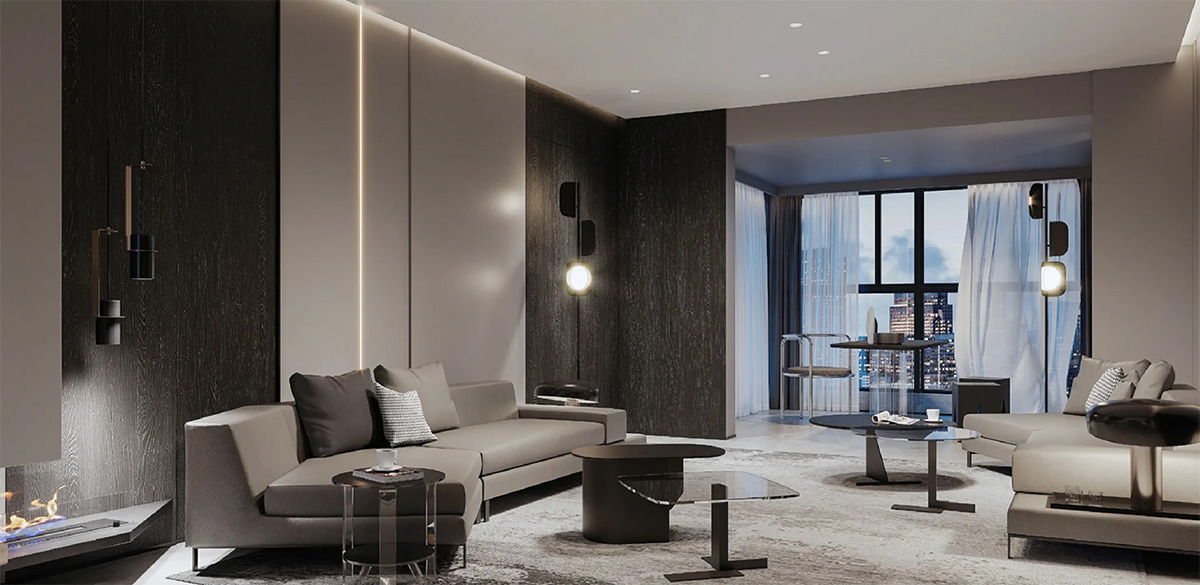
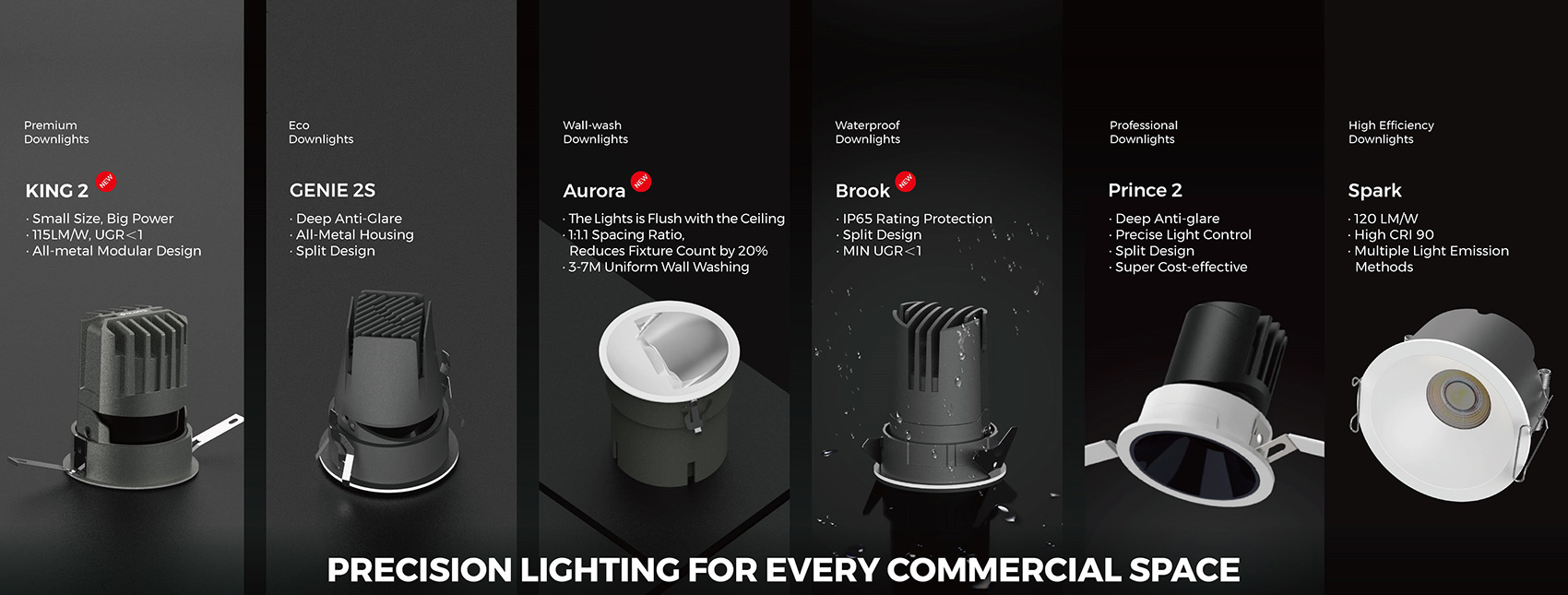
The KING 2 Series Premium Downlights feature an exquisite appearance, top-tier manufacturing craftsmanship, and a new patented optical lens design. It delivers uniform and soft light distribution with an ultra-high luminous efficacy of 115LM/W. Its glare-free design ensures visible light without dazzle (URG < 1). Combining compact dimensions with high power output and a modular mechanical structure, it offers versatile application capabilities. This product series targets five-star luxury hotels and high-end villa projects, engineered for professional lighting demands.
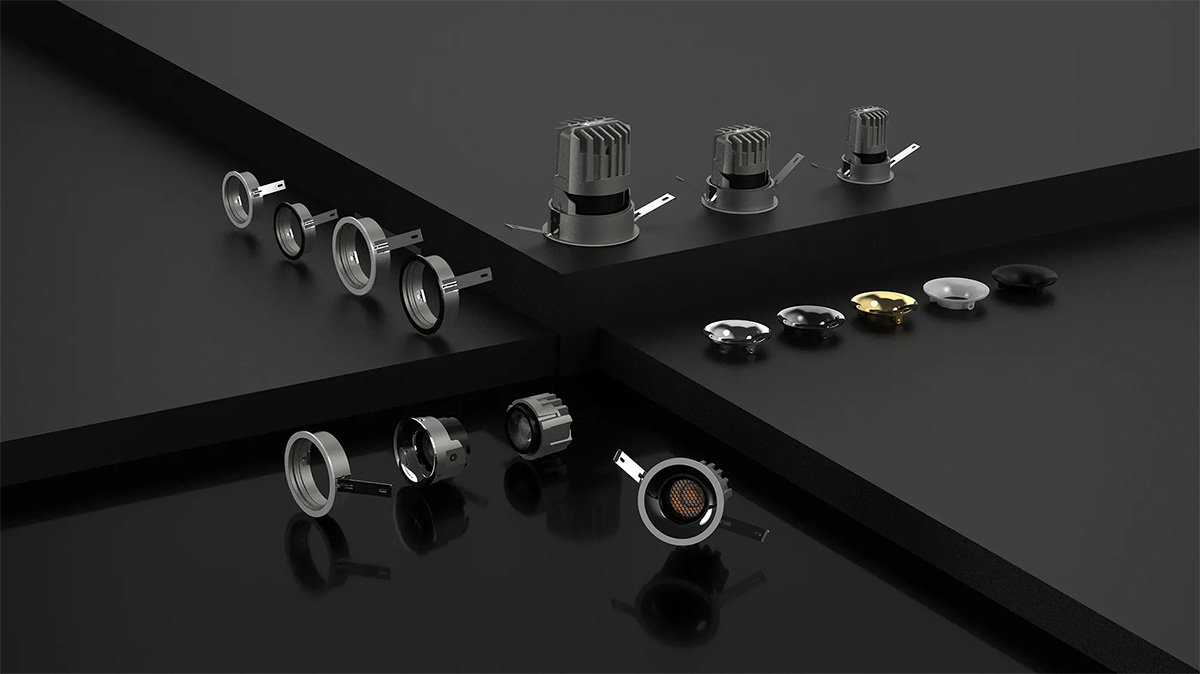
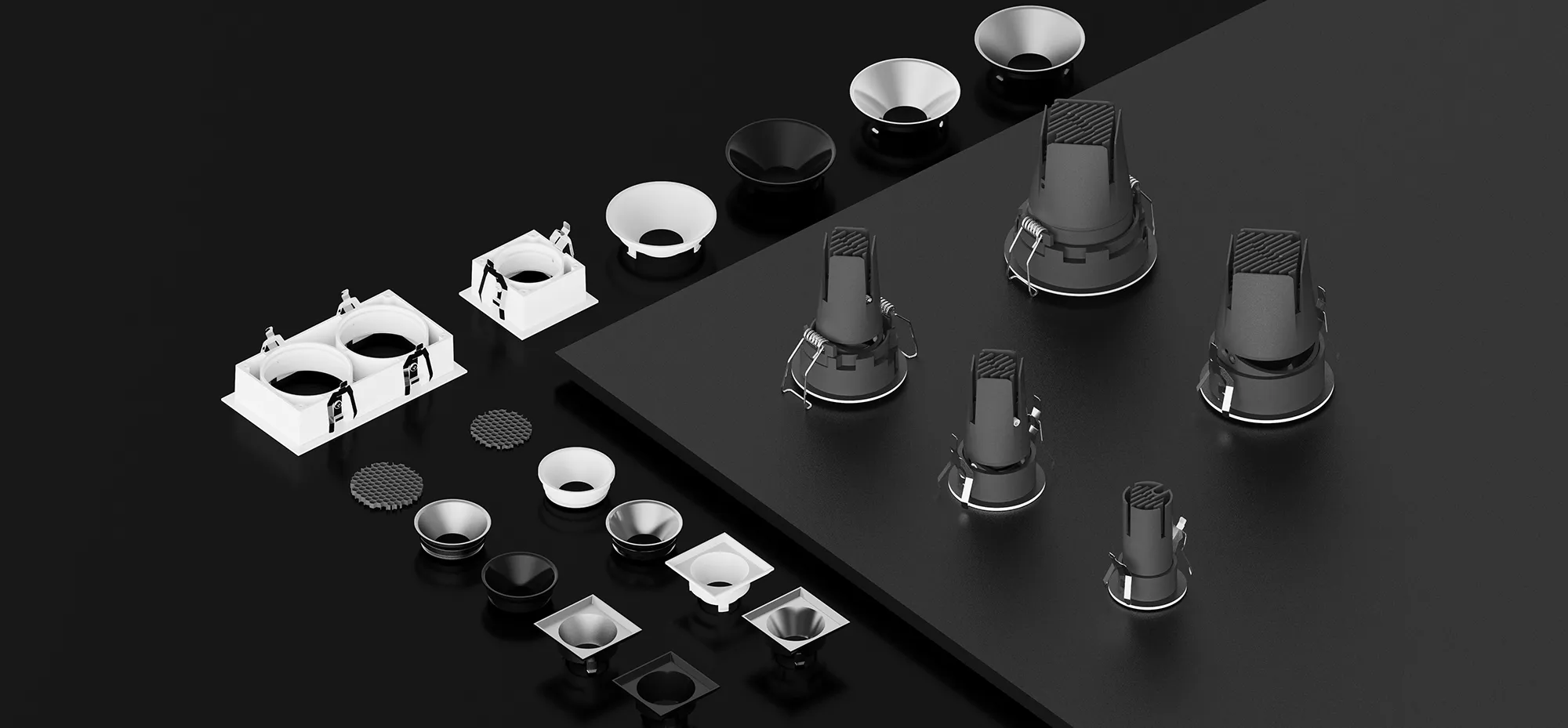
The GENIE 2S Series Eco Downlights boasts a sleek design with deep anti-glare features, a 45° shading angle, and a slim 5mm bezel. It delivers excellent illumination, gentle yet powerful, with various optical options including a narrow 9° beam angle and a high CRI of 90. Perfect for upscale hospitality and residential, its all-metal body ensures efficient heat dissipation while offering flexibility in installation, meeting designers' highest standards. The all-metal body design ensures efficient heat dissipation, while the product's slim and delicate build allows for flexible adaptation, meeting designers' pursuit of ultimate application.
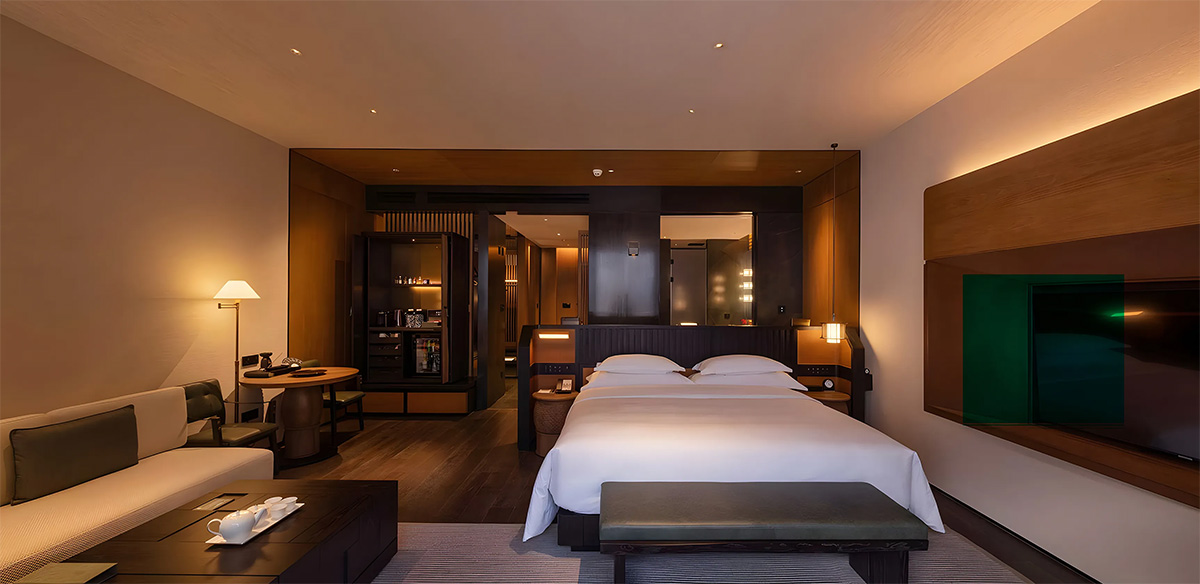
The PRINCE 3 Series Professional Downlights offer advanced lighting control compatibility and refined optical performance. It supports sophisticated lighting scenes and flexible project requirements across diverse hospitality applications.
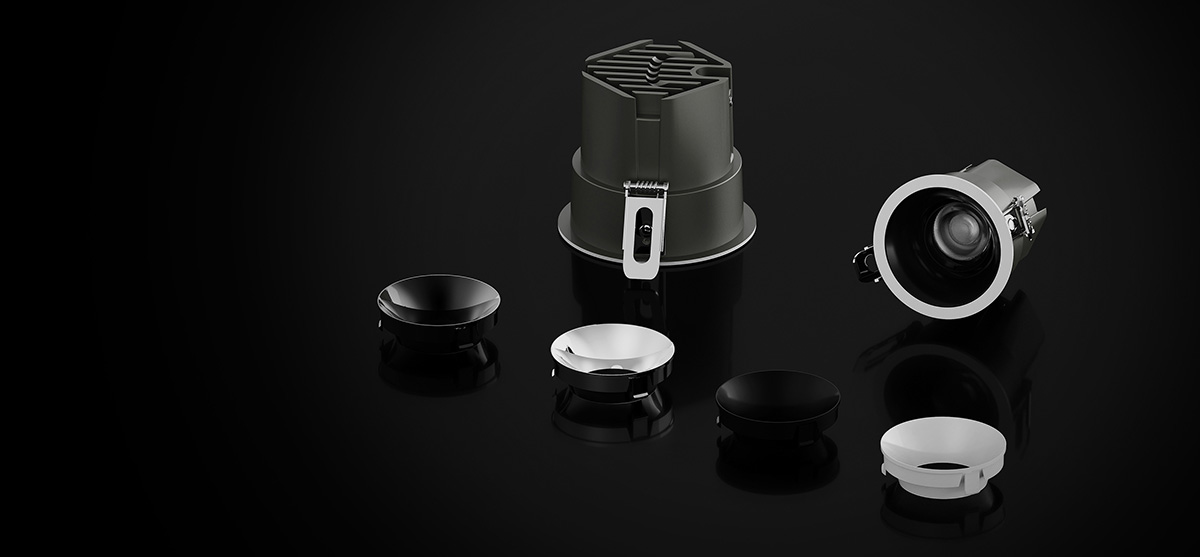
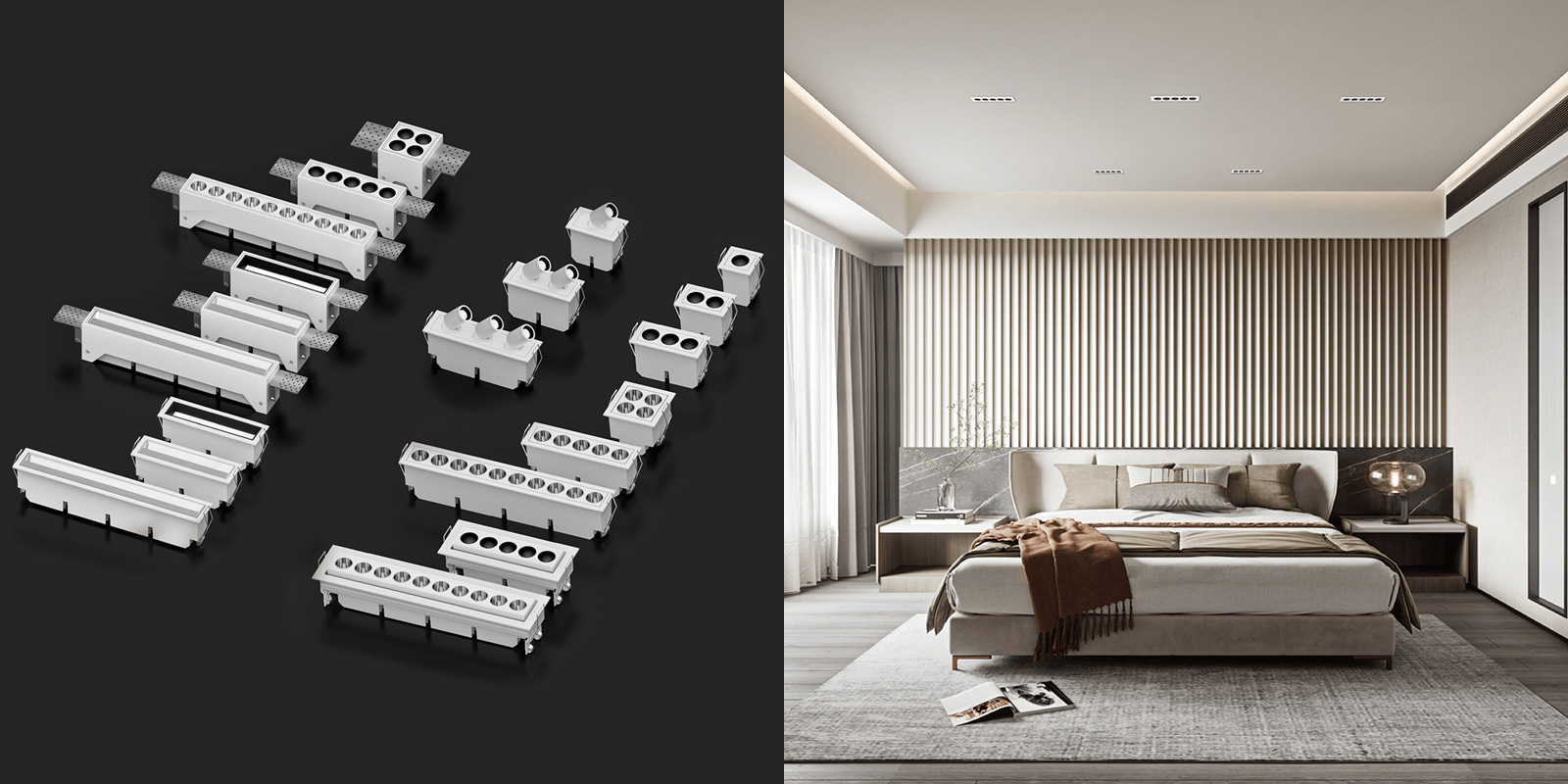
The Magicube Series Mini Grille Light is delicate, compact, and of a linear outlook. It includes 4 optics, including a ±20° adjustable round grille, retractable spotlight, floor lighting, and wall washer, and supports recessed, pre-recessed, and surface-mounted installation. It can achieve precise accent lighting, basic lighting, and wall washing.
All COLORS Lighting LED downlights are available on the DIALux platform, providing great convenience for lighting designers. By accessing accurate photometric data and simulation tools, designers can efficiently plan layouts, visualize lighting effects, and optimize performance for real projects.
Conclusion
Living room lighting has evolved significantly, and downlights have become a central element in modern design. Their growing popularity reflects not only technological advancements but also changing lifestyle preferences and higher expectations for comfort and aesthetics.
From their increasing use in everyday life to their transformation into primary lighting sources, downlights offer unmatched versatility and performance. Their ability to provide uniform illumination, support layered lighting, and integrate seamlessly into architectural design makes them an ideal choice for contemporary living rooms.
By understanding their features and applying proper design strategies, homeowners and designers can create lighting environments that enhance both functionality and atmosphere. With reliable product solutions such as COLORS Lighting's KING 2, GENIE 2S, PRINCE 3, and Magicube series LED downlights, achieving high-quality living room lighting has never been more accessible.
As lighting continues to shape how we experience our homes, well-designed downlight systems will remain at the forefront of creating comfortable, efficient, and visually engaging living spaces.