
Blog
What Are Recessed Downlights? What Are Downlights Used For?
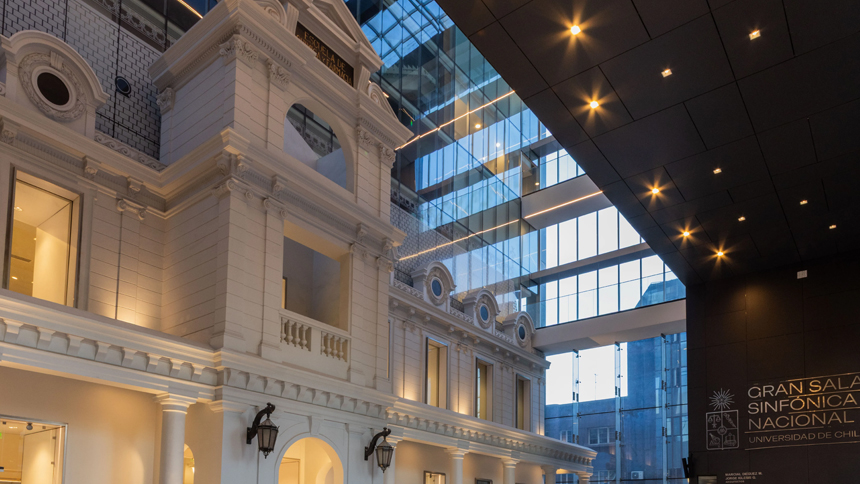
What Are Recessed Downlights? What Are Downlights Used For?

Joyce Alva.UpdatedNovember 20, 2026|12 mins Read
Lighting is more than simply illuminating a room. It influences how people perceive space, interact with their surroundings, and experience an architectural environment. Among the many lighting fixtures used in modern buildings, recessed downlights have become a popular choice for residential, commercial, and hospitality projects because of their discreet appearance, versatile light distribution, and ability to integrate seamlessly into different ceiling designs.
From hotel corridors and retail displays to luxury residences and office interiors, recessed LED downlights provide functional illumination while supporting a clean, uncluttered architectural aesthetic. But what exactly are recessed downlights? How do they differ from other lighting fixtures, and where are they most effective?
What Are Recessed Downlights?
Recessed downlights are lighting fixtures installed into an opening in a ceiling, with most of the fixture body concealed above the ceiling surface. Unlike pendant lights or surface-mounted luminaires, recessed downlights maintain a relatively low-profile appearance, allowing the ceiling to remain visually clean while directing light downward into the space.
Also known as recessed ceiling lights or can lights in some markets, these fixtures are widely used in modern architectural lighting because they combine practical illumination with a minimalist design.
Most modern recessed downlights use LED technology, offering energy-efficient operation, a long service life, and a wide range of color temperatures, beam angles, and light outputs. Depending on their optical design, they can provide general illumination, focused task lighting, or accent lighting for architectural features and decorative objects.
A recessed downlight typically consists of several key components:
Housing: The main body of the fixture, installed inside the ceiling and designed to accommodate the light source and electrical components.
LED light source: Generates illumination and determines important performance characteristics, including light output, color temperature, and color rendering.
Optical system: Includes reflectors, lenses, diffusers, or other optical elements that control the direction and distribution of light.
Trim or bezel: The visible part of the fixture that finishes the ceiling opening. Depending on the design, it may be prominent, minimal, or nearly invisible.
LED driver: Regulates the electrical power supplied to the LED light source.
The exact configuration varies by product. Some recessed downlights use a traditional housing, while others feature integrated, compact designs that simplify installation in suitable ceiling structures.
Ultimately, the defining feature of a recessed downlight is its installation method and downward-directed light distribution. Rather than making the fixture itself a visual centerpiece, recessed lighting allows the illumination to become part of the architectural experience.
What Are Downlights Used For?
Downlights are versatile lighting fixtures that can support several different lighting functions. Their effectiveness depends on factors such as beam angle, lumen output, color temperature, installation height, and positioning.
In architectural lighting design, downlights are commonly used for the following purposes.
1. General Lighting for Overall Illumination
One of the most common applications of recessed downlights is providing general or ambient lighting throughout a room.
When arranged according to a lighting plan, downlights distribute illumination across floors, walls, furniture, and working surfaces. This creates a comfortable baseline level of brightness without relying on bulky ceiling fixtures. General downlighting is particularly suitable for residential living rooms and bedrooms, hotel guest rooms and corridors, office spaces and meeting rooms, retail stores and shopping centers, restaurants and reception areas.
For these applications, the goal is not simply to maximize brightness. Instead, the lighting layout should provide sufficient, reasonably uniform illumination while minimizing harsh contrasts and uncomfortable glare. The number, spacing, and output of the downlights should be determined according to the room dimensions, ceiling height, surface reflectance, and required illuminance. A well-planned layout helps prevent both dark areas and excessive overlapping light.
2. Task Lighting for Functional Areas
Downlights can also provide task lighting by directing light toward specific areas where people perform activities requiring clear visibility.
In kitchens, recessed downlights can illuminate countertops, sinks, and food preparation areas. In offices, they can contribute to suitable illumination for desks and workstations. In hotel bathrooms, appropriately selected downlights can support everyday grooming activities.
However, the positioning of task downlights is important. A fixture placed directly behind a person may cast shadows onto the working surface, while a poorly aimed beam may create reflections on glossy materials or screens. For more demanding visual tasks, downlights are often combined with dedicated task lighting, such as under-cabinet lights, desk lamps, or mirror lighting. This layered approach provides better control over both illumination and visual comfort.
3. Accent Lighting for Architectural Features
Accent lighting draws attention to a particular object, surface, or architectural detail.
With a suitable beam angle and light distribution, recessed downlights can highlight artwork, sculptures, decorative furniture, display products, and selected interior finishes.
For example, a narrow-beam downlight can create a concentrated pool of light on a sculpture in a hotel lobby. In a retail store, directional downlights can emphasize merchandise and help distinguish display areas from the surrounding space. The effectiveness of accent lighting depends on the contrast between the illuminated subject and its surroundings. Too little contrast may make the feature difficult to distinguish, while excessive contrast can create visual discomfort.
Adjustable recessed downlights are especially useful when the lighting direction needs to change according to display arrangements or interior design requirements.
4. Wall Washing for Vertical Surfaces
Wall washing is another important application of downlights in architectural lighting.
Instead of concentrating light on a small area, wall-washing downlights are designed to distribute illumination across a larger vertical surface. This can make walls appear brighter and more visually open while emphasizing textures, finishes, and architectural proportions.
Typical applications include hotel reception walls and corridors, retail display walls, gallery and exhibition spaces, feature walls in luxury residences and commercial interiors with decorative surface materials. Uniformity is particularly important for wall washing. Incorrect fixture spacing, unsuitable optics, or improper positioning can produce scallops, bright spots, and uneven illumination.
Dedicated wall-washing optics are generally preferable when consistent vertical illumination is a key design requirement.
5. Creating Atmosphere and Visual Hierarchy
Downlights also play a significant role in establishing the atmosphere of an interior space.
Warm white lighting can help create a relaxed and welcoming environment in hotel rooms, lounges, and residential interiors. Neutral white lighting may be suitable for offices, retail spaces, and contemporary commercial environments where visual clarity is important.
By combining different beam angles, brightness levels, and lighting positions, designers can establish a visual hierarchy that guides attention through a space. For example, a hotel lobby might use general downlighting for circulation areas, focused beams to highlight artwork, and softer supplementary lighting around seating areas. The result is more visually engaging than a space illuminated with identical brightness everywhere.
Downlights therefore serve not only as functional light sources but also as tools for shaping how people perceive and experience an interior.
What Are the Different Types of Recessed Downlights?
Recessed downlights are available in a variety of designs to accommodate different ceiling conditions, lighting requirements, and architectural styles. Understanding these differences helps designers and project specifiers select suitable fixtures for each application.
1. Fixed Recessed Downlights
Fixed downlights direct light downward along a predetermined axis. Their light distribution remains unchanged after installation.
They are commonly used for general illumination in corridors, bedrooms, offices, hotel rooms, and other areas where a consistent lighting layout is required. Because their direction is fixed, they are particularly suitable for projects with clearly defined lighting positions and straightforward installation requirements.
2. Adjustable Recessed Downlights
Adjustable downlights allow the light beam to be tilted or directed toward a selected area.
This flexibility makes them useful for accent lighting, artwork illumination, retail displays, and architectural features that may require more precise light placement. Adjustable fixtures are also valuable in spaces where displays or furniture arrangements may change over time. Rather than relocating the entire fixture, users can adjust the light direction to accommodate different layouts.
When selecting adjustable downlights, it is important to consider the available tilt angle, beam control, glare performance, and the visual appearance of the fixture when aimed.
3. Trimless Recessed Downlights
Trimless downlights are designed to integrate closely with the surrounding ceiling, often using a plaster-in or similar finishing system.
Once installation and finishing are complete, the fixture can appear almost seamless with the ceiling surface. This makes trimless designs particularly attractive for minimalist interiors, luxury residences, high-end hotels, and contemporary commercial spaces.
However, trimless fixtures generally require careful coordination between the lighting supplier, ceiling contractor, and interior designer. The installation opening, finishing materials, and mounting details must be considered early in the project to achieve the intended result.
4. Deep-Recessed and Low-Glare Downlights
Deep-recessed downlights position the light source farther inside the fixture body, reducing its direct visibility from certain viewing angles.
Combined with appropriate optical components, this design can help control glare and improve visual comfort. Low-glare downlights are particularly relevant in environments where occupants spend extended periods looking around a space, including hotel lounges, offices, restaurants, and residential living areas.
However, a recessed appearance alone does not guarantee low glare. Optical design, shielding angle, luminous intensity, viewing direction, and the overall lighting layout all influence the final result. For projects with strict visual comfort requirements, glare performance should be evaluated using appropriate photometric data rather than appearance alone.
5. Small-Aperture and Mini Recessed Downlights
Small-aperture downlights feature compact visible openings that can integrate neatly into ceilings with limited visual space.
They are often used in luxury residences, boutique hotels, retail interiors, and other architectural environments where designers want to minimize the visual presence of lighting fixtures. Despite their compact size, well-designed mini downlights can deliver controlled illumination for circulation areas, display features, and selected architectural details.
When choosing a small-aperture fixture, it is important to assess its actual lumen output, beam angle, glare control, and compatibility with the ceiling structure. A smaller opening does not automatically mean better performance or a more comfortable lighting effect.
Where Are Recessed Downlights Commonly Used?
Because recessed downlights can provide general, task, and accent illumination, they are used across a wide range of residential and commercial environments.
1. Residential Lighting
In residential spaces, recessed downlights help create clean ceiling lines while providing practical illumination for daily activities.
In living rooms, they can serve as general lighting and complement floor lamps, pendant lights, or concealed linear lighting. In kitchens, they can illuminate circulation areas and contribute to task lighting. In bedrooms, dimmable downlights can provide comfortable ambient illumination when combined with bedside lighting. Bathrooms require additional attention to product suitability. The fixture’s ingress protection rating, electrical safety requirements, and installation location should be assessed according to the applicable regulations and the possibility of exposure to moisture.
A balanced residential lighting scheme typically combines several lighting layers rather than relying on downlights alone.
2. Hotels and Hospitality Spaces
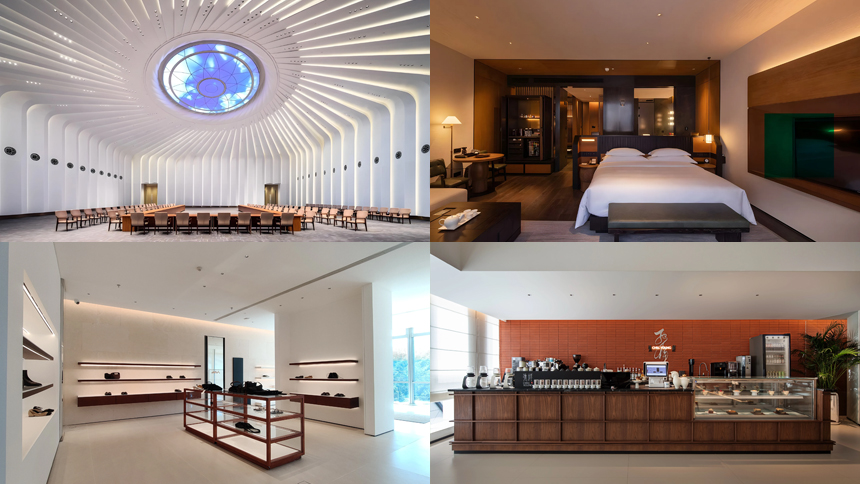
Hotels require lighting that supports both functionality and atmosphere. Recessed downlights are widely applicable in guest rooms, corridors, reception areas, restaurants, meeting rooms, and other hospitality spaces.
In guest rooms, they can provide general illumination while maintaining a visually uncluttered ceiling. In corridors, a carefully planned layout can improve orientation and create a consistent visual rhythm. In reception areas and lounges, directional downlights can emphasize decorative surfaces and selected furnishings. For premium hospitality projects, glare control, color rendering, dimming compatibility, and consistent light quality are important considerations.
Downlights should also work with other lighting systems, including decorative pendants, wall lights, concealed linear fixtures, and indirect lighting, to create a cohesive lighting environment throughout the property.
3. Retail Stores and Showrooms
Retail lighting must support both product visibility and the intended brand experience. Recessed downlights can provide general illumination across sales floors while adjustable or directional models emphasize merchandise, display tables, and selected product categories.
For products with important color characteristics, high color rendering can help customers perceive materials and colors more accurately. Different retail environments may also require different beam distributions. A narrow beam may be suitable for highlighting a particular display, whereas a wider beam may be more appropriate for general merchandise areas.
The lighting design should consider not only the brightness of individual products but also the contrast, shadows, reflections, and visual comfort of the overall space.
4. Offices and Commercial Buildings
In offices and commercial buildings, downlights can contribute to general illumination in reception areas, meeting rooms, circulation spaces, and selected work areas. The fixture selection should account for ceiling height, workstation arrangements, screen use, and applicable lighting standards.
Glare control is particularly important in spaces where people work with computers or perform visually demanding tasks. A fixture that produces sufficient illuminance may still be unsuitable if it creates uncomfortable brightness in occupants’ fields of view.
For this reason, downlights are often combined with other luminaire types and evaluated as part of an integrated lighting plan.
5. Restaurants, Cafés, and Leisure Spaces
Restaurants and cafés use lighting to establish a distinctive atmosphere while maintaining sufficient visibility for dining and circulation.
Recessed downlights can provide general illumination, highlight selected tables, or emphasize architectural elements such as textured walls and decorative finishes. Warm color temperatures and controlled brightness are often suitable for relaxed dining environments, while more neutral lighting may be appropriate for contemporary cafés, food preparation areas, or multifunctional commercial spaces.
The final lighting scheme should reflect the venue’s design concept, operating requirements, and intended customer experience.
What Are the Benefits of Recessed LED Downlights?
Recessed LED downlights offer several advantages when selected and installed appropriately.
1. Clean and Minimalist Appearance
Because most of the fixture body is concealed within the ceiling, recessed downlights help maintain a simple architectural appearance. This is particularly useful in modern interiors where visible fixtures may compete with the ceiling design, decorative materials, or other architectural elements.
2. Flexible Lighting Applications
A wide range of optical designs allows downlights to serve different functions, from general illumination to focused accent lighting and wall washing. This flexibility makes them suitable for projects with diverse lighting requirements, provided the correct fixture is selected for each application.
3. Energy-Efficient Operation
LED technology can provide high light output with relatively low power consumption compared with many traditional light sources. Actual energy savings depend on the fixture's efficacy, operating hours, control strategy, required illuminance, and the system it replaces.
Dimming and occupancy-based controls may further reduce energy consumption when they are properly designed and compatible with the selected equipment.
4. Long Service Life
Quality LED downlights can offer long operating life and reduced lamp replacement requirements. However, actual service life depends on factors such as LED temperature, driver quality, electrical conditions, operating environment, and the fixture’s thermal design.
For commercial projects, reviewing the manufacturer’s lifetime data, warranty terms, and maintenance requirements is important when comparing products.
5. Integration with Architectural Lighting Systems
Recessed downlights work well alongside linear lighting, wall washers, track lights, and other architectural luminaires. This allows lighting designers to establish multiple layers of illumination within one coordinated system.
Rather than expecting one fixture type to satisfy every requirement, combining suitable luminaires can produce better visual comfort, greater flexibility, and a more coherent architectural result.
What Are the Best Recessed Downlights for Architectural Lighting Projects?
Selecting the right recessed downlights is an important step toward creating an architectural lighting scheme that balances visual comfort, functional performance, and aesthetic consistency. For commercial spaces, hotels, luxury residences, and other design-led environments, the most effective solution is one that integrates fixture performance with the overall lighting concept.
COLORS Lighting develops architectural lighting solutions for projects where optical control, visual comfort, and design integration are essential. Its Downlights collection offers options for different interior lighting requirements, helping designers and project teams coordinate general illumination, focused lighting, and architectural accents within a cohesive scheme.
KING 2 Series Recessed Downlights
KING 2 is a high-end series of downlights, the all-metal housing design ensures the reliability, the patented optical lens design ensures high light efficiency of 115LM/W and low glare of UGR <1, the modular design ensures the easy installation and easy maintenance.
QUEEN Series Recessed Downlights
The QUEEN Series recessed downlights & spotlights feature an ultra-slim 45mm profile, engineered specifically for shallow ceiling applications where space is limited. Offered in round, square, single-head and twin-head configurations, the series delivers exceptional design flexibility to match diverse architectural aesthetics. Equipped with 5-position DIP switch CCT tuning, it provides precise colour temperature control for both high-end residential interiors and professional commercial lighting projects.
Aurora Series Recessed Downlights
The Aurora Series features an excellent deep anti-glare design with a shading angle of 100° and a narrow edge design of 4.5mm. It boasts an outstanding wall-washing optical design, offering a variety of reflector options and product size choices to meet wall-washing applications in spaces with a height of 3-6 meters. The products are applied to murals or corridor walls in luxury villas and star-rated hotels, achieving a smooth transition with the ceiling when washing the wall.
Brook Series Recessed Downlights
Brook is an adjustable recessed downlight with IP65 protection, suitable for indoor and outdoor scenarios like walkways, airports, parking lots, and swimming pools. The recessed part is shielded by a metal casing, and the pre-wired LED Power supply shares the same IP65 rating. It features excellent anti-glare performance, precise spot effect, high luminous efficiency, and flexible optical configurations, offering optimal lighting solutions for high-standard spaces.
GENIE 2S Series Recessed Downlights
The GENIE 2S Series boasts a sleek design with deep anti-glare features, 45° shading angle, and a slim 5mm bezel. It delivers excellent illumination, gentle yet powerful, with various optical options including a narrow 9° beam angle and high CRI of 90. Perfect for upscale hospitality and residential, its all-metal body ensures efficient heat dissipation while offering flexibility in installation, meeting designers’ highest standards. The all-metal body design ensures efficient heat dissipation, while the product’s slim and delicate build allows for flexible adaptation, meeting designers’ pursuit of ultimate application.
GIANT Series Recessed Downlights
The GIANT Series high-power downlight is available in a range of sizes (from φ120mm to φ170mm), with a maximum wattage of 60W and a maximum installation distance of 10m. It is suitable for airports, subway stations, as well as other large-scale transportation hubs and high-ceiling public spaces.
Magicube Series Recessed Downlights
The MAGICUBE Series mini grille light is delicate, compact and of a linear outlook. It includes 4 optics, including ±20° adjustable round grille, retractable spotlight, flood lighting and wall washer and supports recessed, pre-recessed and surface-mounted installation. It can achieve precise accent lighting, basic lighting and wall washing.
Prince 3 Series Recessed Downlights
The Prince 3 Series professional downlight, with its unique cross-beam optical design, effectively suppresses stray light, thereby creating a clear and perfectly round light spot. The floating lens design allows a single luminaire to function as both a fixed downlight and an adjustable downlight, enabling changes in illumination direction in both the vertical (25°) and horizontal (360°) planes without rotating the heat sink.
When specifying these products, project teams should confirm the exact model configuration, beam angle, photometric files, installation dimensions, dimming compatibility, and applicable performance data against the requirements of the project.
From recessed downlights to linear lighting and other architectural luminaires, COLORS Lighting supports a coordinated approach to lighting design, helping create spaces that are functional, visually comfortable, and architecturally expressive.
Conclusion
Lighting that complements every space. Recessed downlights are more than practical ceiling fixtures. They are an essential part of modern architectural lighting, combining discreet integration, controlled illumination, and design flexibility. From providing comfortable ambient lighting to highlighting architectural details, the right downlights can transform how a space looks, feels, and functions.
As architectural expectations continue to evolve, choosing the right lighting solution requires more than considering brightness and energy efficiency. Optical performance, visual comfort, color quality, and seamless integration with the surrounding environment all play an important role.
At COLORS Lighting, we believe that great lighting should work in harmony with architecture. Through thoughtfully designed downlights and comprehensive architectural lighting solutions, we help designers, lighting professionals, and project partners create lighting environments that bring spaces to life.
Related Content
View All
Recessed LED Round Downlight: Classic Commercial & Residential Use
Joyce Alva
10 mins Read

Best Under Cabinet Lighting: Complete Buying Guide for Modern Kitchens (2026)
Aurora Jin
8 mins Read

Precision Lighting: Mini Neon LED Strip Lights for Displays & Marine Projects
Aurora Jin
6 mins Read
Common Issues, Causes, and Optimization Strategies in Architectural Façade Lighting Projects
Ryan Lee
15 mins Read