
Blog
LED Wall Washer Downlights: Gallery Lighting Pros’ Secret
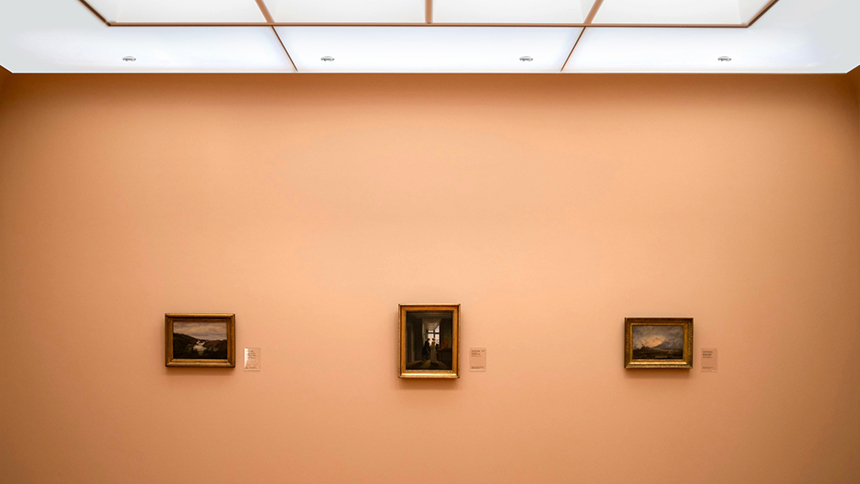
LED Wall Washer Downlights: Gallery Lighting Pros’ Secret

Joyce Alva.UpdatedJune 12, 2026|15 mins Read
In modern architecture and interior design, lighting is no longer treated as a secondary element. It has become a powerful design language capable of shaping emotions, enhancing textures, guiding visual attention, and defining spatial identity. Among all lighting fixtures, downlights have become one of the most widely used solutions across commercial, residential, hospitality, and cultural spaces.
From luxury villas and boutique hotels to museums and contemporary galleries, downlights can now be seen almost everywhere. Their clean appearance, functional flexibility, and refined lighting effects make them an essential part of modern architectural lighting design. Especially in wall washing applications, LED downlights have evolved far beyond simple illumination — they now create atmosphere, elevate artistic expression, and transform how people experience space.
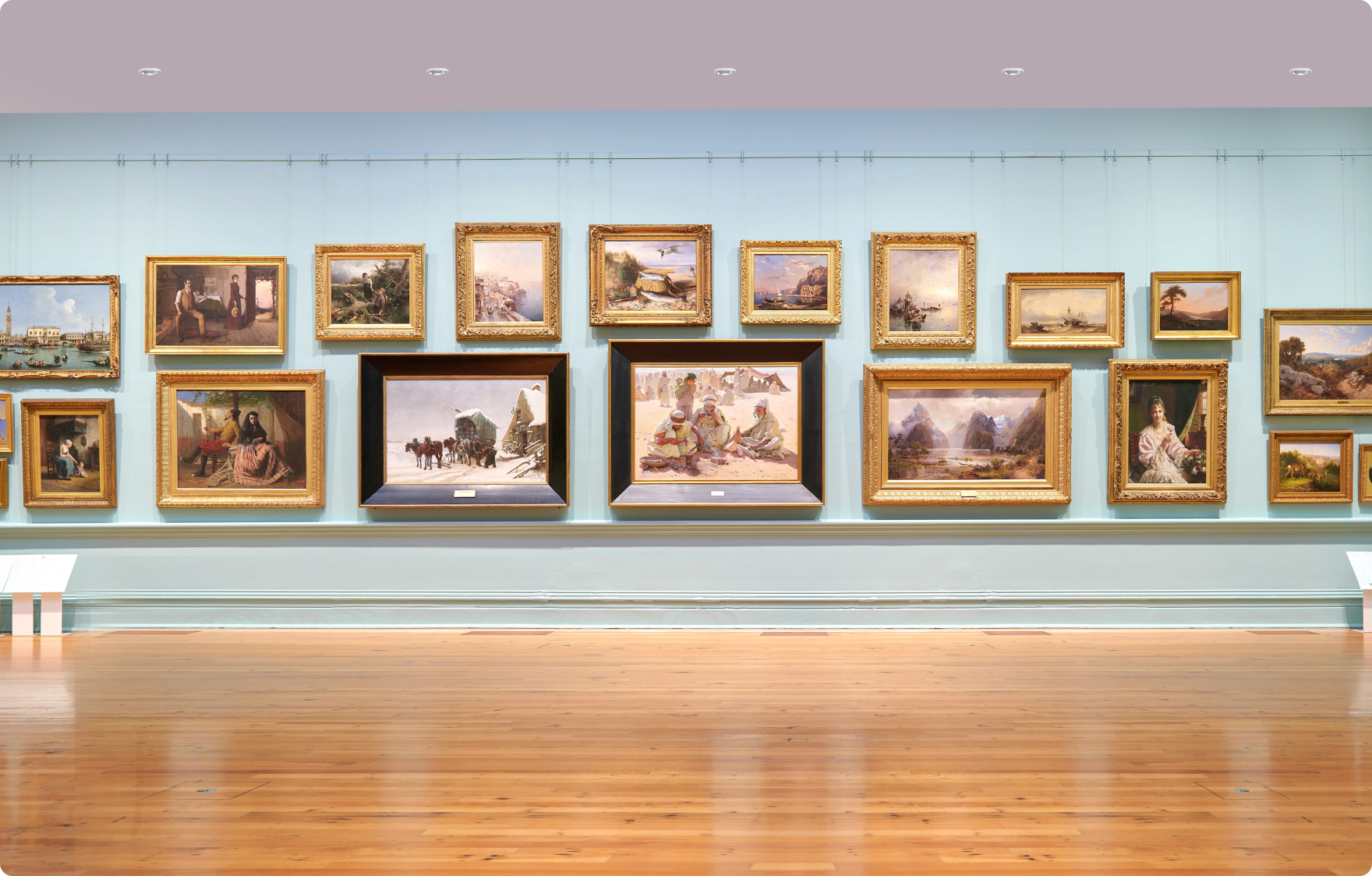
The Growing Presence of Downlights in Modern Spaces
Walk into almost any contemporary building today, and you will likely encounter downlights. Whether in homes, shopping malls, restaurants, offices, hotels, airports, or galleries, downlights have become one of the most universal lighting solutions in modern architecture.
This widespread adoption is not accidental. Compared with traditional lighting fixtures, modern LED downlights provide a cleaner appearance, higher energy efficiency, longer lifespan, and much more sophisticated lighting control. Their recessed installation allows ceilings to remain visually uncluttered while delivering comfortable and precise illumination.
More importantly, downlights help create emotional experiences within spaces. Lighting directly influences how people feel inside a space. Soft, carefully controlled downlighting can create warmth, intimacy, calm, elegance, and even a sense of luxury.
Warm white LED downlights are often used in hospitality and residential environments because they produce a relaxing and welcoming atmosphere. In restaurants and hotels, they help guests feel comfortable and emotionally connected to the environment. In homes, they create cozy living spaces that support relaxation and daily life.
In commercial environments, downlights can also create a sophisticated and premium ambiance. High-quality optical control reduces glare and improves visual comfort, allowing people to stay longer in spaces without eye fatigue.
Beyond warmth and comfort, downlights can also generate: minimalist and modern aesthetics, quiet and contemplative environments, dramatic architectural contrast, spatial depth and layering, focused visual hierarchy, and artistic and gallery-like experiences.
Unlike large decorative fixtures that visually dominate ceilings, recessed downlights integrate seamlessly into architecture. They emphasize the space itself rather than the fixture, allowing walls, materials, textures, and objects to become the visual focus. This is especially important in architectural wall washing, where lighting is intended to reveal surfaces smoothly and naturally.
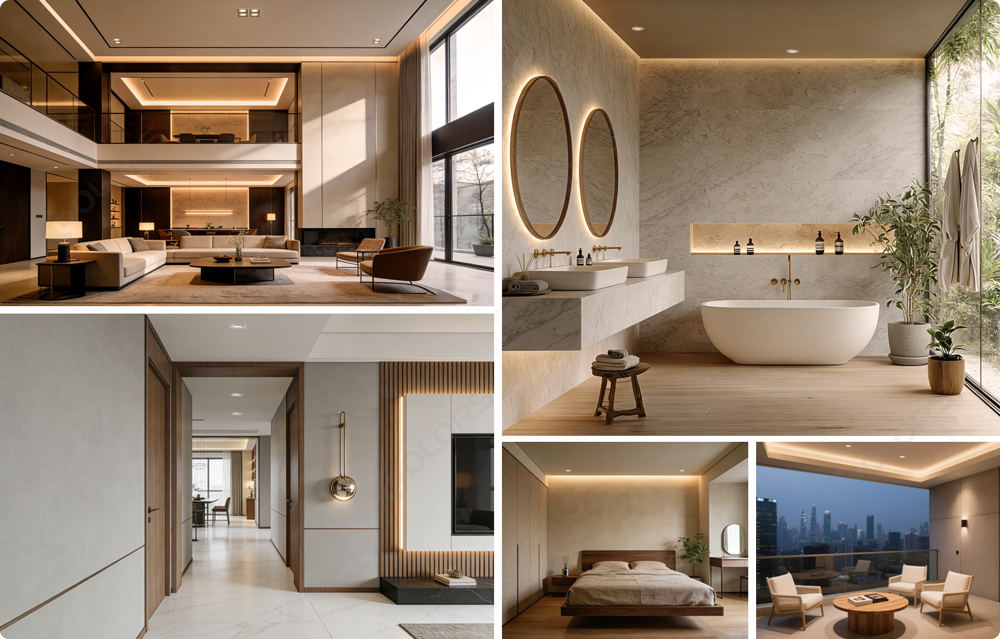
Different Spaces Require Different Downlights
Although downlights are widely used, not every downlight is suitable for every environment. Different applications require different beam angles, glare control, color temperatures, CRI performance, installation methods, and optical designs.
Selecting the wrong downlight can negatively affect both visual comfort and the overall spatial experience.
Residential Spaces
In residential environments such as living rooms and bedrooms, the priority is comfort and softness. Wide-beam downlights with warm color temperatures are typically preferred to create uniform ambient lighting.
Anti-glare performance is especially important in homes because residents spend long periods within these spaces. Excessive glare can create discomfort and visual fatigue.
Typical residential downlight characteristics include: warm white lighting (2700K–3000K), soft beam distribution, deep anti-glare design, minimalist recessed appearance, and smooth dimming capability.
Retail Stores and Shopping Malls
Retail lighting focuses heavily on attracting attention and enhancing product presentation. Narrow-beam or adjustable downlights are commonly used to highlight merchandise, display shelves, or featured products.
Higher brightness and stronger contrast are often required to create visual impact.
Retail spaces typically require: accent lighting capability, high CRI for accurate color rendering, adjustable beam angles, directional lighting flexibility, and a bright and dynamic atmosphere.
Offices and Workspaces
Office lighting prioritizes efficiency, concentration, and reduced eye strain. Uniform illumination is critical to support productivity.
In office applications, downlights usually feature: neutral white color temperature, low glare rating, wide and even distribution, energy efficiency, and flicker-free performance.
Hotels and Hospitality Projects
Hotels combine functional lighting with emotional storytelling. Different areas require different lighting approaches.
For example, lobby spaces often use dramatic architectural downlighting, corridors require soft and guiding illumination, guest rooms prioritize warmth and relaxation, and restaurants require intimate and layered lighting.
Wall washing is particularly common in luxury hospitality environments because it enhances textures, artwork, and spatial depth.
Museums and Galleries
Gallery lighting is among the most demanding applications in architectural lighting design.
Unlike other environments where lighting primarily supports functionality, gallery lighting directly influences how artworks are perceived emotionally and visually.
This is where specialized wall-washing downlights become essential.
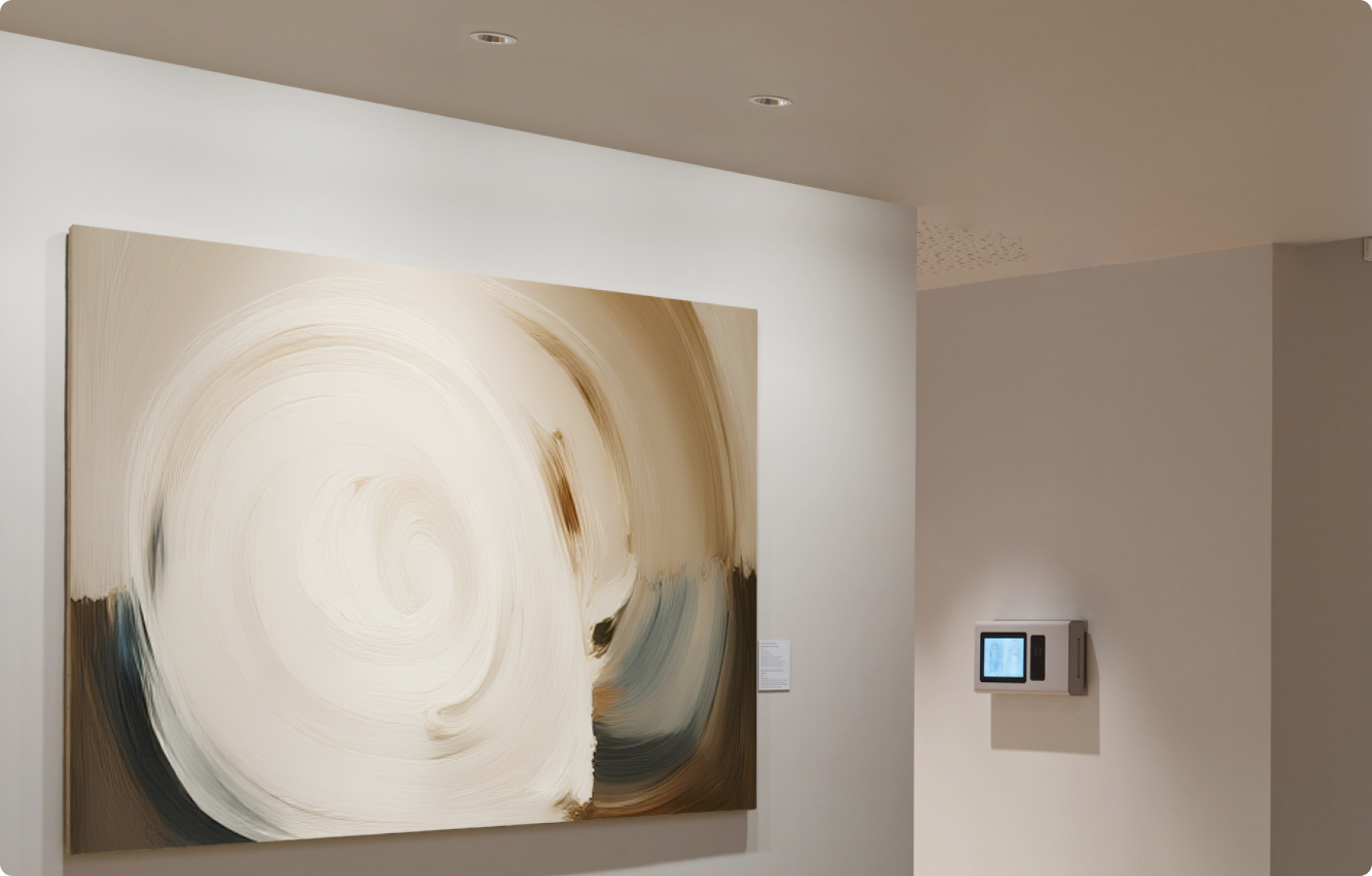
Why Downlights Are Essential in Gallery Spaces
A gallery is not simply a room filled with artwork. It is a carefully curated visual environment where lighting shapes the entire viewing experience.
Without proper lighting, even extraordinary artwork can lose its emotional impact, depth, texture, and visual clarity.
Among all lighting solutions, LED downlights — especially wall-washing downlights — play a critical role in gallery spaces because they combine precision, comfort, invisibility, and architectural integration.
Enhancing Artwork Visibility
One of the primary goals of gallery lighting is to reveal artworks accurately and beautifully.
Wall-washing downlights provide smooth and uniform illumination across vertical surfaces, ensuring paintings, murals, photographs, and installations are evenly lit without harsh hotspots or shadows.
This allows viewers to appreciate: color accuracy, fine textures, surface details, brush strokes, material depth, and artistic composition.
Poor lighting can distort colors, create uneven brightness, or introduce distracting reflections that interfere with the viewing experience.
High-quality downlights with professional optics help maintain visual integrity.
Creating Emotional Atmosphere
Gallery spaces are designed to encourage contemplation, immersion, and emotional connection.
Soft and glare-free downlighting creates a calm and refined atmosphere that allows visitors to focus entirely on the artwork.
Unlike aggressive or overly decorative lighting, recessed downlights remain visually discreet. They support the artistic environment without becoming visual distractions themselves.
Wall washing also helps galleries feel larger, cleaner, and more open by evenly illuminating vertical surfaces and reducing harsh contrasts.
Improving Spatial Depth
Architectural wall washing enhances more than just artwork — it enhances the space itself.
Smooth vertical illumination visually expands walls and creates a sense of depth and openness. In contemporary galleries where minimalism is often preferred, wall-washing downlights help define architecture subtly and elegantly.
This layered lighting approach creates: better spatial perception, enhanced architectural texture, premium visual quality, sophisticated ambiance, and stronger visual hierarchy.
Reducing Glare for Visitor Comfort
Visitors in galleries often spend extended periods observing artwork carefully. Excessive glare can quickly create discomfort and visual fatigue.
Professional anti-glare downlights help maintain visual comfort while still delivering sufficient illumination levels.
Deep recessed optics and shielding angles are especially important because they prevent direct exposure to intense light sources.
This balance between brightness and comfort is one of the major reasons downlights outperform many alternative fixtures in gallery environments.
Why Not Use LED Strips, Neon Strips, or Other Fixtures?
Other lighting fixtures certainly have their own advantages, but when it comes to professional gallery wall washing, downlights remain one of the most effective solutions.
Comparison
| Dimension | LED strips | Neon strips | Track lights | Wall-washing downlights |
| Best use cases | Indirect lighting, cove lighting, decorative architectural effects | Decorative branding, hospitality, retail, entertainment spaces | Flexible accent and directional lighting in gallery spaces | Professional gallery, museum, luxury hotel, premium architectural projects |
| Wall washing suitability | Limited | Not suitable | Moderate | Excellent |
| Optical control | Limited — uneven illumination, visible light dots, restricted projection distance | None — purely decorative output, no precision optics | Adjustable, but less refined for smooth wall washing | Specialized optics deliver smooth, uniform wall illumination |
| Visual distraction | Light dots may draw attention away from artwork | High — neon strips is designed to be seen, competes with artwork | Exposed fixture hardware may disrupt minimalist aesthetics | Recessed installation keeps focus entirely on the artwork |
| Architectural integration | Surface-mounted; visible in ceiling or wall profiles | Decorative element — intentionally visible | Ceiling-mounted track system remains exposed | Fully recessed; invisible fixture, cleaner ceiling appearance |
| Color accuracy | Acceptable for ambient use; not optimized for fine art | May distort artwork colors due to colored light output | Good, depending on lamp specification | High CRI optics preserve true artwork color rendering |
| Glare control | Minimal glare management | No glare control; high-brightness decorative output | Moderate; depends on accessory attachments | Deep anti-glare design reduces eye strain, improves visitor comfort |
| Spatial depth & texture | Low — ambient wash without directional modelling | Low — emissive source, no wall-surface modelling | Moderate — accent-focused rather than surface-washing | High — wall washing enhances spatial depth and surface texture |
| Gallery application | Ambient architectural lighting only | Not recommended for gallery environments | Suitable for accent; often combined with recessed downlights | Primary solution for professional curatorial presentation |
LED Strips
LED strips are excellent for indirect lighting, coves, outlines, and decorative effects. However, they often struggle to deliver the precise optical control required for gallery wall washing.
Common limitations include: uneven wall illumination, visible light dots, limited projection distance, reduced depth perception, and lower visual sophistication for fine art presentation.
LED strips are more suitable for ambient architectural lighting rather than professional artwork illumination.
Neon Strips
Neon strips are ideal for decorative and expressive lighting applications. They create strong visual identity and artistic atmosphere in hospitality, retail, and entertainment spaces.
Check out wall-washing lighting for indoor and outdoor use: Best Architectural Exterior Wall Wash Lighting: Expert LED Picks
However, neon strips are generally not appropriate for galleries because it introduces visual distraction, lacks precise optical control, competes visually with artworks, may distort artwork colors, and creates more decorative than curatorial lighting.
Neon strips are designed to be seen, while gallery downlights are designed to disappear into the architecture.
Track Lights
Track lighting is also widely used in galleries because of its flexibility and adjustability. However, track systems remain visually exposed and may disrupt minimalist architectural aesthetics.
In contrast, recessed downlights offer: cleaner ceiling appearance, better architectural integration, more refined visual environment, and softer and more seamless wall washing.
Many premium galleries combine track lights for accent lighting with recessed wall-washing downlights for general vertical illumination.
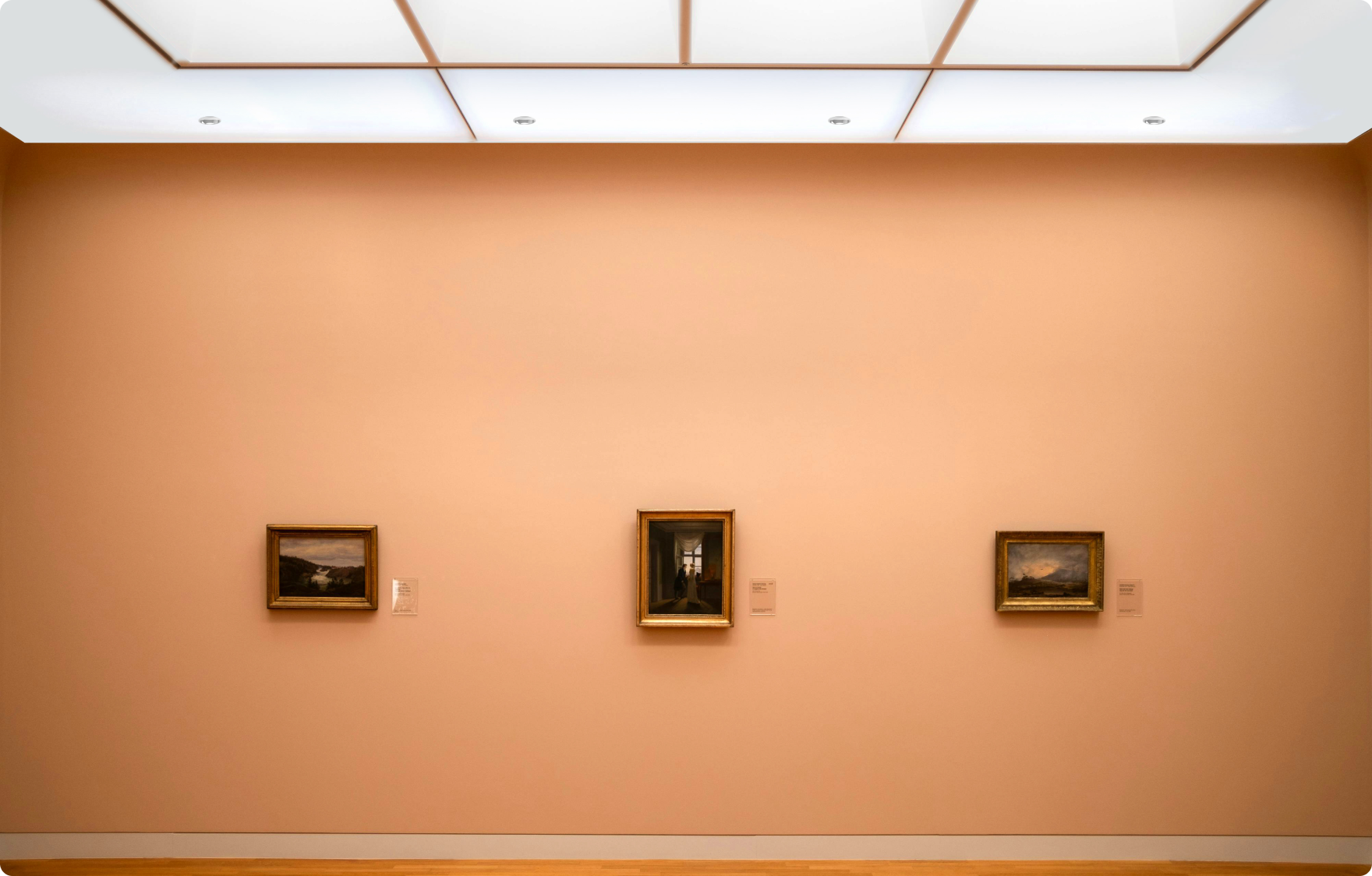
The Core Advantages of Downlights in Galleries
Compared with other fixtures, professional wall-washing downlights provide several key advantages:
1. Precise Optical Distribution
Specialized optics deliver smooth and uniform wall illumination.
2. Invisible Integration
Recessed installation keeps attention on the artwork instead of the fixture.
3. Superior Visual Comfort
Deep anti-glare designs reduce eye strain and improve visitor experience.
4. Architectural Enhancement
Wall washing improves spatial depth and surface texture.
5. Professional Curatorial Lighting
Downlights create museum-quality presentation standards.
These advantages explain why high-end galleries, museums, luxury hotels, and premium architectural projects increasingly rely on advanced wall-washing downlights.
Aurora Series: Professional Wall-Washing Downlights by COLORS Lighting
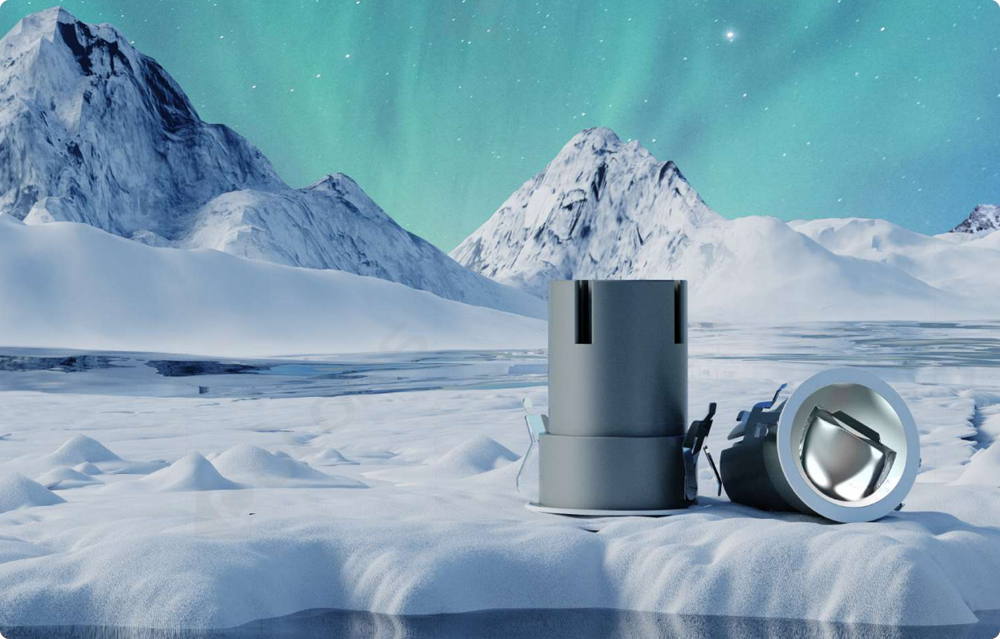
To meet the growing demand for professional architectural wall washing, COLORS Lighting developed the Aurora Series — a specialized LED downlight family designed for smooth, efficient, and visually comfortable wall illumination.
The Aurora Series combines optical precision, deep anti-glare performance, elegant architectural integration, and versatile installation flexibility, making it highly suitable for gallery spaces, luxury villas, museums, corridors, and hospitality projects.
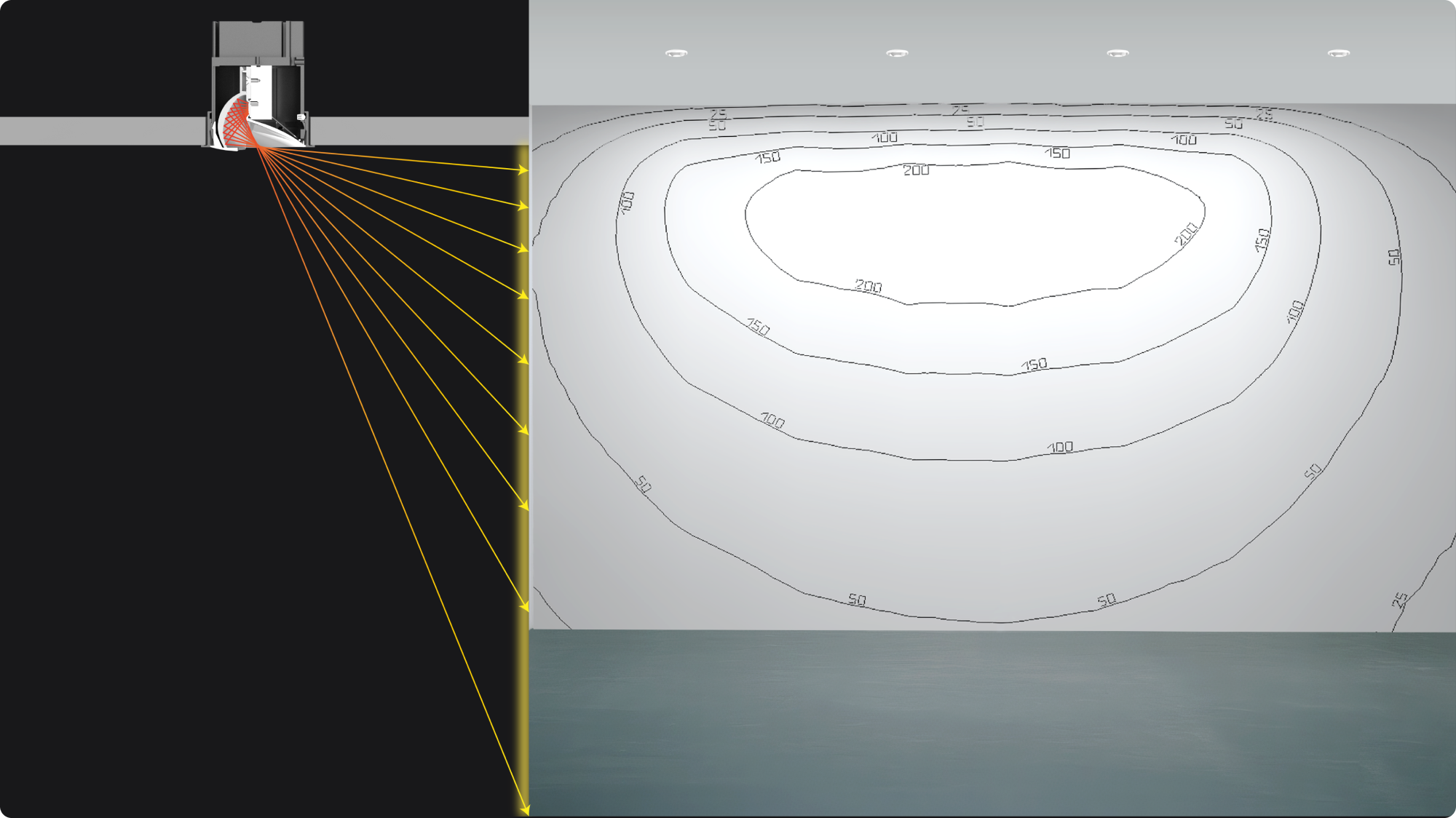
Designed for Professional Wall Washing
The Aurora Series features a specialized wall-washing optical design that enhances wall coverage efficiently and beautifully.
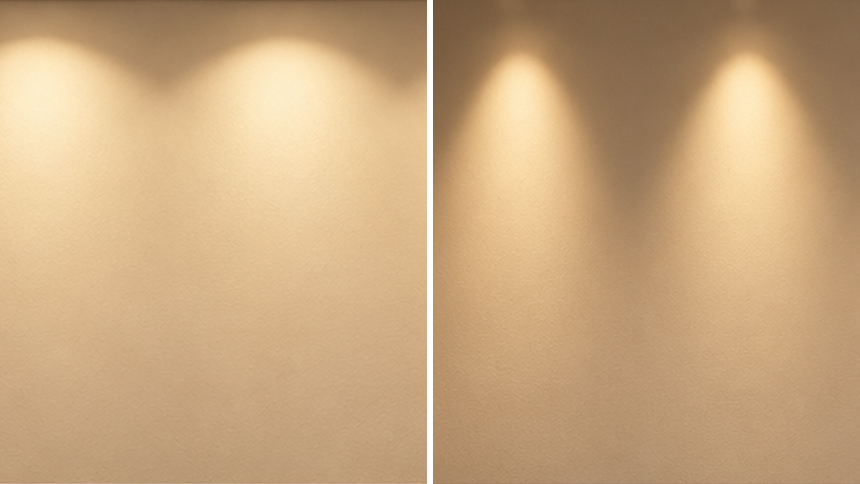
Unlike standard downlights that often produce uneven brightness or harsh transitions, Aurora creates smooth and consistent vertical illumination. This is particularly important in galleries where visual uniformity directly affects artwork presentation. The series is optimized for wall-washing applications in spaces with heights ranging from 3 to 6 meters.
This makes it suitable for: art galleries, museums, luxury villas, hotel corridors, exhibition halls, and high-end commercial interiors.
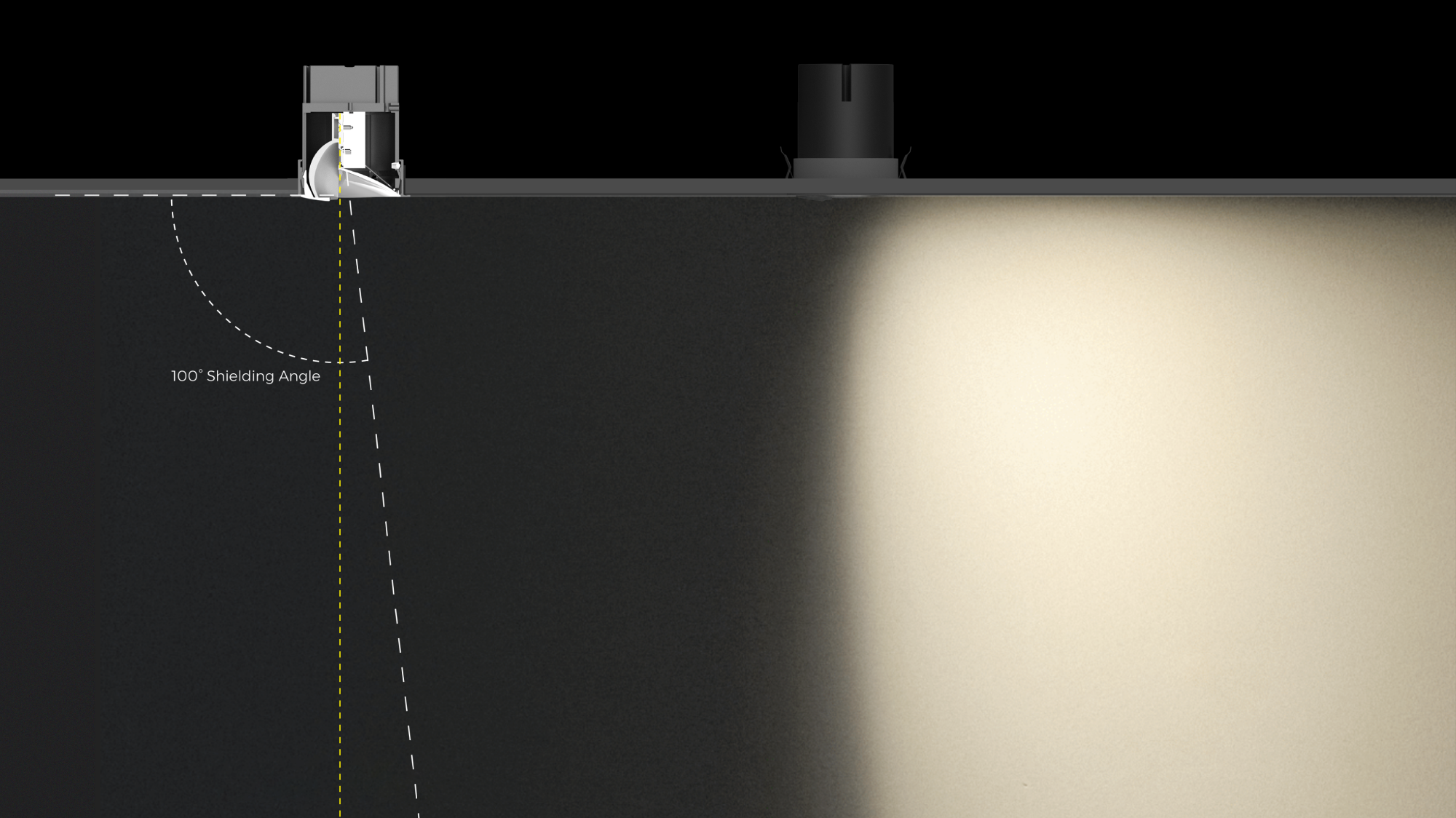
Excellent Anti-Glare Performance
Visual comfort is one of the most critical factors in gallery lighting.
The Aurora Series LED Wall Washer Downlight incorporates a deep anti-glare design with a 100° shielding angle. This helps minimize direct glare while maintaining strong wall illumination performance.
For gallery visitors, this means: more comfortable viewing experience, reduced visual fatigue, better concentration on artworks, and a cleaner visual environment.
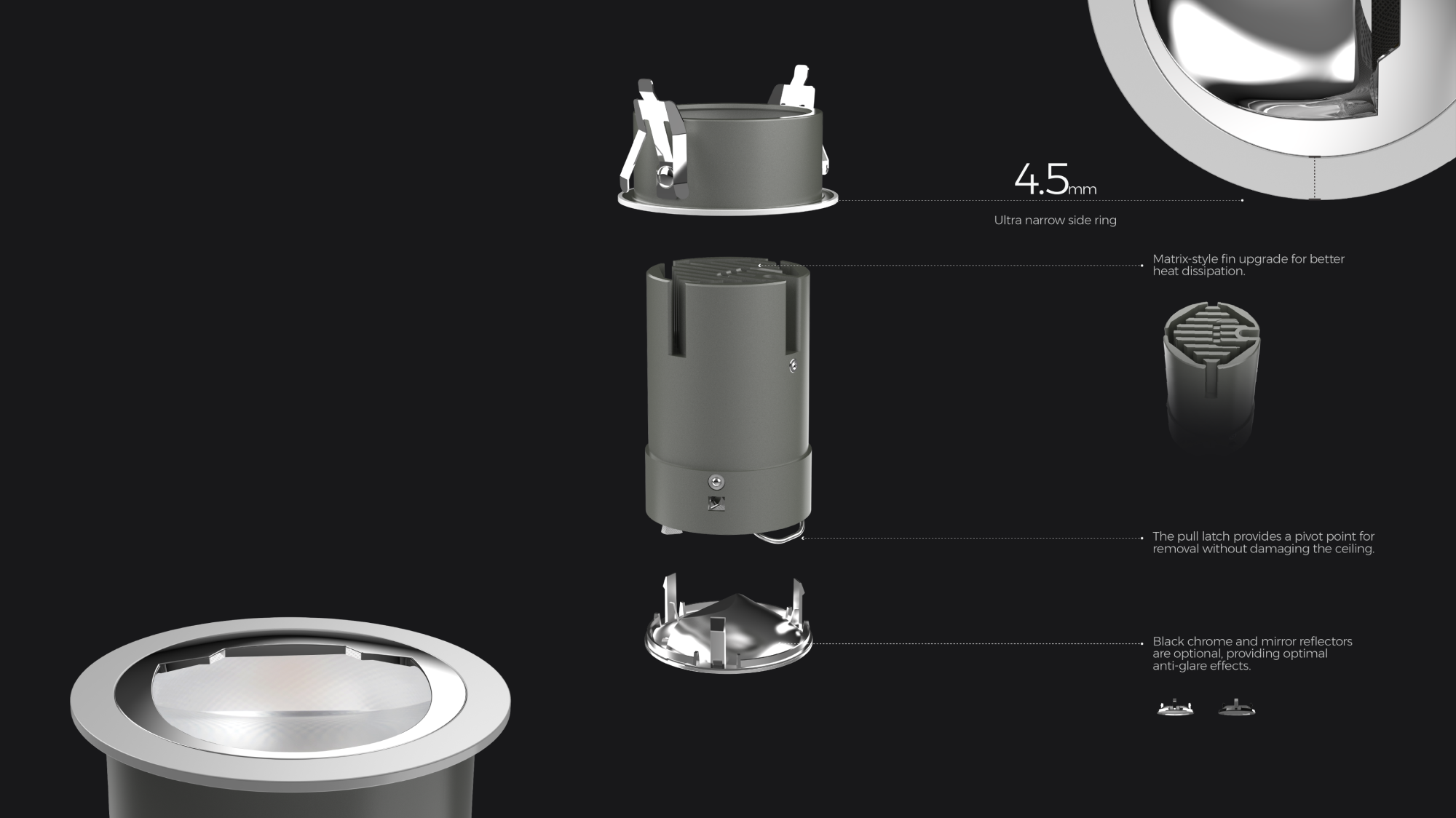
The optional black chrome and mirror reflectors further optimize anti-glare effects while enhancing the fixture's premium appearance.
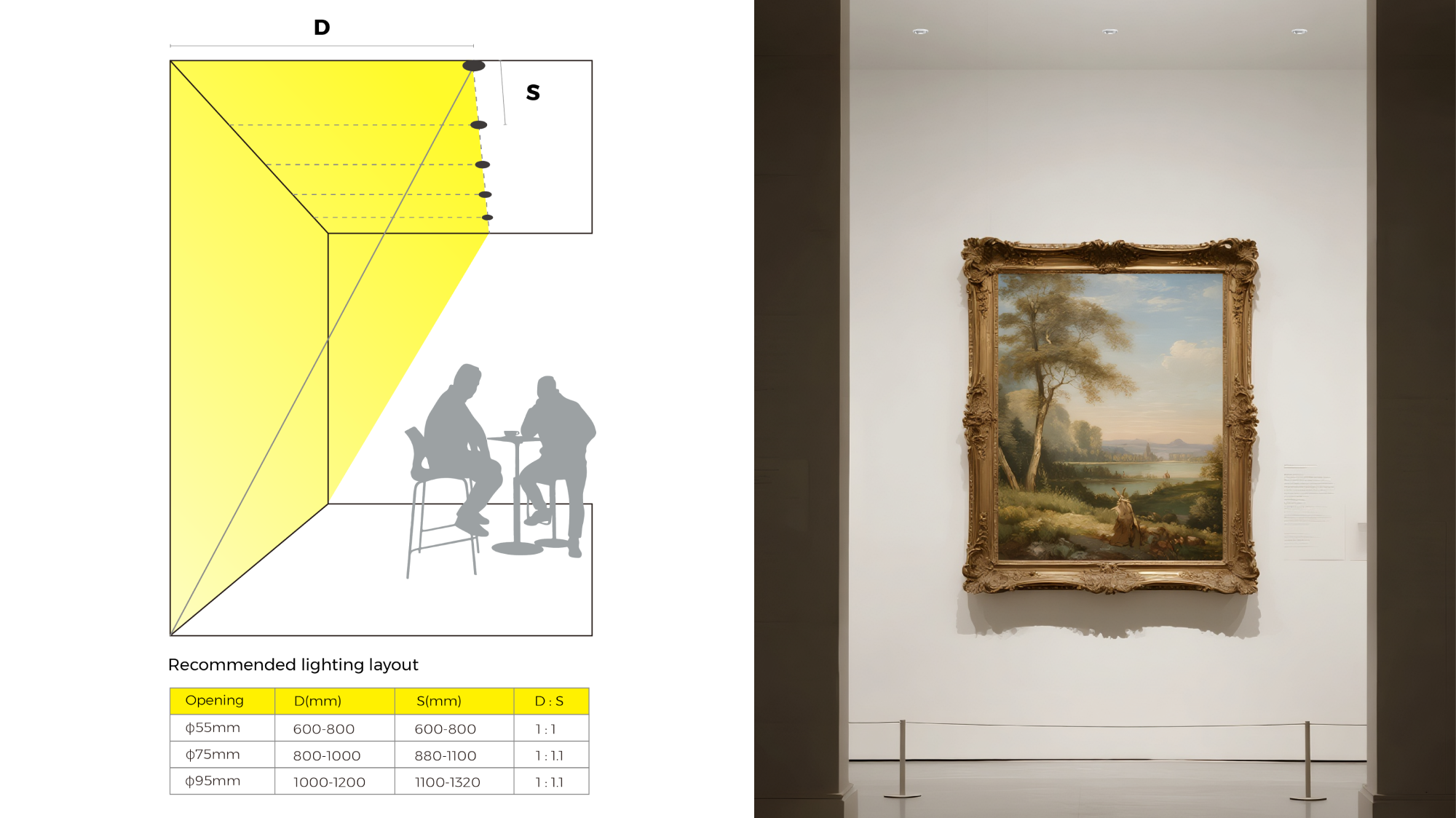
Ultra-Narrow Trim Design
Modern galleries often favor minimalist ceiling aesthetics.
Aurora features an ultra-narrow edge design of only 4.5mm, allowing the fixture to integrate almost invisibly into ceilings.
This subtle integration helps maintain architectural purity while ensuring the lighting effect remains the visual focus. The fixtures also sit flush with the ceiling, creating smooth transitions without shadowed corners.
For galleries and museums, this creates a cleaner and more refined visual atmosphere.
Flexible Size and Power Options
Different gallery sizes require different lighting scales.
Aurora offers comprehensive size and power combinations, including: Φ55mm models, Φ75mm models, and Φ95mm models. Power options range from 6W to 30W, covering ceiling heights from 3 meters up to 6 meters.
This versatility allows lighting designers to create consistent wall-washing performance across different architectural conditions.
High-Quality Lighting Performance
Aurora Series products feature:
CRI 90 for excellent color rendering
3000K warm white lighting
Professional 40° beam angle options
High CRI performance is especially important in galleries because it preserves the true colors and textures of artworks.
Whether displaying paintings, sculptures, photographs, or mixed-media installations, accurate lighting helps audiences experience the artwork as intended.
Easy Installation and Maintenance
The Aurora Series adopts a split design for easier installation and maintenance.
The frame can be installed independently while the luminaire body is secured using spring-ball structures. This simplifies installation and future servicing.
Additionally, the pull-latch removal design allows maintenance without damaging the ceiling.
For galleries and commercial projects where maintenance efficiency matters, this becomes a significant operational advantage.
Recessed and Trimless Options
Aurora supports both recessed and trimless installation methods.
This flexibility allows designers to match different architectural styles: standard recessed installation for practical projects and trimless integration for ultra-minimalist premium spaces.
Such adaptability makes Aurora highly suitable for sophisticated gallery and museum environments.
Conclusion
Lighting has evolved into one of the most important elements in architectural design, and LED downlights now play a central role in shaping modern spaces.
From residential interiors to luxury hospitality projects and cultural environments, downlights help create comfort, elegance, emotional atmosphere, and architectural depth. However, different applications require different lighting solutions, and nowhere is this more evident than in gallery spaces. In galleries, lighting does far more than provide visibility. It influences how artworks are perceived, how visitors emotionally engage with exhibitions, and how architecture supports artistic storytelling.
Professional wall-washing downlights offer significant advantages over many other lighting fixtures because they provide: uniform vertical illumination, superior visual comfort, precise optical control, minimal architectural intrusion, enhanced spatial depth, and museum-quality presentation.
The Aurora Series by COLORS Lighting demonstrates how advanced wall-washing downlights can elevate gallery environments through optical precision, deep anti-glare performance, minimalist integration, and flexible installation options.
As architectural lighting continues to evolve, specialized downlights like Aurora will remain essential tools for designers seeking to create immersive, refined, and emotionally engaging spaces where both architecture and art can truly shine.
FAQs
1. Benefits of using LED wall washer downlights in gallery and luxury interior design.
LED wall washer downlights provide smooth, uniform vertical illumination that enhances artwork, textured walls, and architectural surfaces without harsh hotspots or shadows. They create a calm, refined atmosphere, improve spatial depth, and reduce glare—critical for galleries and high‑end interiors. Products like the Aurora series also feature ultra‑narrow trims (4.5mm) and deep anti‑glare designs, allowing the fixture to blend invisibly into ceilings while delivering professional wall‑washing performance.
2. Where can I buy energy-efficient LED wall washer downlights online?
You can purchase energy‑efficient LED wall washer downlights directly from specialized manufacturers. For example, the Aurora series is available from COLORS Lighting at their official website. Always choose a trusted supplier that provides detailed optical specifications, anti‑glare ratings, and CRI values to ensure genuine energy efficiency and lighting quality.
3. How to choose the correct beam angle for wall wash lighting.
For wall washing applications, a narrower beam angle (typically 40° as in the Aurora series) is recommended when you want to project light evenly from ceiling down to the floor, creating a continuous "wash" effect. Wider angles may cause uneven brightness or light spill. Consider ceiling height: spaces between 3 to 6 meters (e.g., luxury villas, hotel corridors) work best with professional wall‑washing optics like those in the Aurora series, which are specifically designed for consistent vertical coverage.
4. What makes deep anti-glare design critical for wall washer downlights in galleries and hotels?
Deep anti‑glare design (e.g., the Aurora's 100° shielding angle) prevents direct light from entering visitors' eyes, reducing eye strain and visual fatigue. In galleries, this allows viewers to focus entirely on artwork without distractions. In hotels, it creates a comfortable, premium ambiance that encourages guests to stay longer. Without proper glare control, even a well‑lit space feels harsh and uninviting.
5. Can LED wall washer downlights be installed without damaging the ceiling during maintenance?
Yes. Professional wall washer downlights like the Aurora series adopt a split design and pull‑latch removal system. The frame installs independently, and the luminaire body is secured with spring‑ball structures. This allows maintenance or replacement without cutting into or damaging the ceiling—a significant advantage for galleries, hotels, and luxury residential projects where ceiling integrity and service efficiency matter.
Related Content
View All
What is the Difference Between Spotlight and Downlight?
Joyce Alva
13 mins Read
Outdoor Recessed Downlights for Walkways, Airports, Parking Lots Projects
Joyce Alva
12 mins Read

LED Recessed Lighting: From Vision to Reality with IDeaLuMia
Ryan Lee
5 mins Read
Best Ultra Slim Recessed Downlights For Low Ceiling Lighting
Aurora Jin
8 mins Read